Are Gutter Guards Worth It? A Homeowner's Guide
A straightforward look at gutter guard types, costs, maintenance, and whether they actually reduce the need for seasonal cleaning.
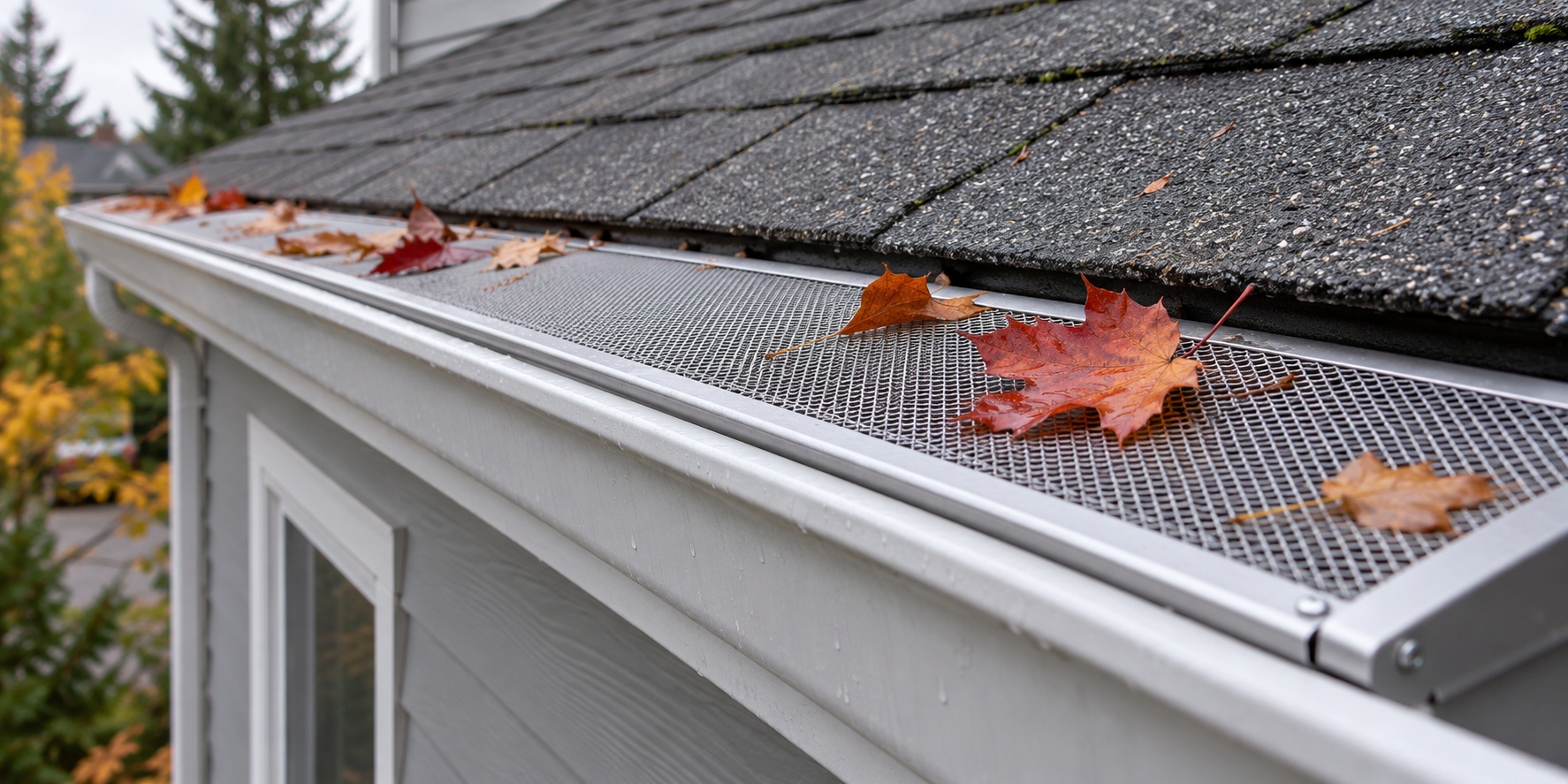
Gutter guards sound like a simple solution. Put something over your gutters, keep the leaves out, and never clean them again. For many homeowners, that promise is appealing enough to warrant a closer look. But gutter guards are not maintenance-free, and they are not right for every home. Understanding what they do, what they cost, and what they still require helps you decide whether they are worth the investment.
This guide covers the types of gutter guards available, how much they cost, how they perform in different conditions, and the honest truth about ongoing maintenance. It is written for homeowners weighing the upfront cost against years of reduced ladder time.
Our gutter guard service can help compare guard options with your existing system.
What gutter guards actually do
Gutter guards sit over or inside your gutters to block leaves, pine needles, and debris while allowing water to flow through. They do not eliminate debris from landing on your roof, and they do not make gutters self-cleaning. What they do is reduce the volume of material that enters the system, which means fewer cleanings and less risk of clogs between maintenance visits.
The trade-off is that guards themselves collect debris on top. Small particles, pine needles, and seed pods can still work their way through some designs, and over time the guard surface can become a litter trap that needs clearing. Guards reduce frequency, but they do not remove the need for attention entirely.
Types of gutter guards and how they compare
Not all gutter guards work the same way, and the right type depends on your roof, nearby trees, and how much maintenance you are willing to do. The four most common categories are mesh, reverse curve, foam, and brush guards.
Mesh and screen guards
Mesh guards use a fine metal or plastic screen stretched over the gutter. They block leaves and larger debris while letting water pass through the openings. Fine mesh can also keep out pine needles and small seeds, which makes it a good choice for homes with deciduous or coniferous trees nearby.
Mesh guards are generally affordable and widely available. They can be installed over existing gutters in many cases, which keeps the project simpler. The main drawback is that fine mesh can clog with tiny debris or pollen during certain seasons, and water may overshoot during heavy rain if the surface becomes covered.
Reverse curve guards
Reverse curve guards use surface tension. Water clings to a curved surface and flows into the gutter, while leaves and debris are shed over the front edge and fall to the ground. These guards are often installed under the shingles at the roof edge, which means they integrate with the roofline rather than sitting on top of the gutter.
Reverse curve systems tend to handle heavy rainfall well and are effective at shedding larger leaves. However, they can struggle with small debris like pine needles, which can collect in the gutter despite the guard. Installation is more involved because it may require lifting shingles, and they are usually more expensive than mesh options.
Foam guards
Foam guards are porous inserts that sit inside the gutter. Water flows through the foam while debris rests on top. They are inexpensive and easy to install, often without professional help. The downside is that foam degrades over time, especially with sun exposure, and it can become a sponge for moisture and small debris. Foam guards typically need replacement more often than metal systems.
Brush guards
Brush guards look like long pipe cleaners that sit inside the gutter. They block large debris while letting water flow around the bristles. Like foam, they are simple and inexpensive, but they can trap debris in the bristles and may need regular removal and rinsing. They are generally considered a lower-end option with a shorter lifespan.
Here is how the main types compare:
Guards still need occasional checks and gutter cleaning.
| Guard type | Approximate cost range | Typical lifespan | Best for |
|---|---|---|---|
| Mesh and screen | $800 - $1,500 installed | 10 to 20 years | Most tree types, general use |
| Reverse curve | $1,200 - $2,200 installed | 15 to 25 years | Heavy leaf fall, large roofs |
| Foam | $300 - $700 installed | 2 to 4 years | Budget projects, temporary use |
| Brush | $400 - $900 installed | 2 to 5 years | Light debris, easy access |
Installed prices assume fitting over an existing, sound gutter system. If your gutters need repair or replacement first, that work is priced separately.
What affects gutter guard cost
Roofline length is the primary cost driver. More linear feet means more material and more labour. Roof pitch and height affect pricing too, because steeper or taller roofs require additional safety measures and time to access.
Guard type matters as well. Mesh guards are generally the most affordable professional option, while reverse curve systems cost more because of the installation method and materials. Foam and brush guards cost the least but need replacement more often, which can make them more expensive over the long term.
Accessibility is another factor. Homes with limited ground access, steep landscaping, or obstacles around the perimeter take longer to work on and may cost more.
Maintenance is still required
This is the part that surprises many homeowners. Gutter guards reduce how often you need to clean your gutters, but they do not eliminate cleaning. Debris still lands on top of the guards, and small particles can work through or around them. Most guard systems benefit from an inspection once or twice a year, and the top surface may need clearing after heavy leaf fall or storms.
For a related guide, see Best Gutter Guards for Canadian Homes.
Mesh guards can clog with fine debris during pollen season or after windy weather. Reverse curve guards can allow pine needles to slip through and collect in the gutter below. Foam and brush guards need the most attention, with debris removal and rinsing every season or two.
If you are installing guards specifically to avoid ever climbing a ladder again, that expectation needs adjusting. What you gain is less frequent cleaning and fewer emergency call-outs for overflowing gutters, not zero maintenance.
The maintenance schedule you can expect
Different guard types need attention at different intervals. Here is a realistic maintenance calendar:
| Guard type | Inspection frequency | Surface clearing | Full service interval |
|---|---|---|---|
| Mesh screen | Twice per year | After heavy leaf fall | Every 3 to 5 years |
| Reverse curve | Once per year | After major storms | Every 5 to 10 years |
| Foam | Every season | Monthly during fall | Every 2 to 4 years |
| Brush | Every season | Every few months | Every 2 to 5 years |
Inspection means walking the perimeter with binoculars or a ladder to check for debris buildup, water overshoot, or sagging sections. Surface clearing means blowing or brushing off the top of the guards so water can enter freely. Full service means removing guards, cleaning the gutters underneath, and reinstalling everything properly.
When gutter guards are worth the investment
Gutter guards make the most sense in specific situations. If your home is surrounded by mature trees that drop leaves, needles, or seeds every autumn, guards can dramatically reduce the amount of material entering your system. If you have a steep roofline or a multi-storey home where ladder work is difficult or unsafe, reducing cleaning frequency is a genuine safety benefit.
Guards are also worth considering if you have had recurring clogs despite regular cleaning, or if you travel often and want the system to be more resilient between maintenance visits. For homeowners who plan to stay in their home long term, the reduction in cleaning frequency can offset the upfront cost over several years.
Another useful read for this project is Gutter Cleaning Cost Guide for Canadian Homes.
When gutter guards may not be necessary
Not every home needs gutter guards. If you have few trees near your roofline, your gutters may only need cleaning once or twice a year anyway, and the guard cost may take a long time to pay back in reduced cleaning bills. If your existing gutters are old, damaged, or incorrectly pitched, installing guards over them does not fix the underlying problem. The gutters should be repaired or replaced first.
Foam and brush guards are often not worth the investment even at their lower price point because they degrade quickly and need frequent replacement. For most homeowners, a quality mesh or reverse curve system provides better long-term value.
Climate considerations for Canadian homes
In Canada, gutter guards face additional challenges. Snow and ice can accumulate on top of guards, and freeze-thaw cycles can affect how water flows into the system. Reverse curve guards can be vulnerable to ice damming if water backs up at the roof edge. Mesh guards generally handle snow well, though ice can temporarily block the surface.
If you live in an area with heavy snowfall, discuss winter performance with your installer. Some guard designs shed snow more effectively than others, and proper installation under the shingles can help prevent ice from getting behind the system.
The long-term cost comparison
One way to decide whether guards are worth it is to compare the upfront cost against years of professional cleaning. A typical gutter cleaning for an average home costs between $150 and $300 per visit, and most homes need two visits per year. That is $300 to $600 per year in cleaning costs.
Over ten years, that is $3,000 to $6,000 in cleaning alone. A mesh guard system costing $1,200 installed could pay for itself in three to four years if it cuts cleaning frequency in half. A reverse curve system costing $1,800 might take five to six years to break even. Foam and brush guards, given their short lifespan, rarely pay for themselves because they need replacement before the savings accumulate.
For additional context, continue with How Often Should You Clean Your Gutters.
This calculation changes if you clean your own gutters. If you are comfortable on a ladder and do the work yourself, the financial case for guards is weaker because you are not paying for professional cleaning in the first place.
The installation process
Professional gutter guard installation follows a straightforward sequence. First, the existing gutters are inspected for pitch, leaks, and secure attachment. Any problems are fixed before guards go on, because installing guards over a failing system hides the problem and makes later repairs harder.
Next, the old gutters are cleaned thoroughly so no debris is trapped underneath the guards. Then the guards are measured, cut, and secured. Mesh guards typically snap or screw into place over the gutter lip. Reverse curve guards may require lifting shingles at the roof edge to tuck the rear edge underneath. Foam and brush inserts are simply placed inside the gutter.
Finally, the installer runs water through the system to confirm flow and checks that downspouts are clear. A proper installation leaves no gaps where debris can bypass the guard and no areas where water overshoots during rain.
The honest bottom line
Gutter guards are not a magic solution, but they are a legitimate tool for reducing gutter maintenance. They work best when matched to your home's specific conditions and installed over a sound, well-pitched gutter system. They cost between roughly $800 and $2,200 installed for most homes, depending on type and roofline length, and they still need periodic checking.
If you have heavy tree coverage, difficult roof access, or a history of clogged gutters, guards are often worth considering. If your gutters are already low-maintenance or need repair first, the investment may not make sense yet.
For homeowners who want to discuss whether gutter guards suit their home, request a free written estimate to review your options. A contractor can assess your roofline, tree coverage, and existing system to tell you whether guards will actually reduce your maintenance or whether regular cleaning remains the better approach.
For an estimate based on your roofline and access, request a free quote.