How Often Should You Clean Your Gutters
A practical guide to gutter cleaning frequency for Canadian homes, based on trees, climate, and roof type.
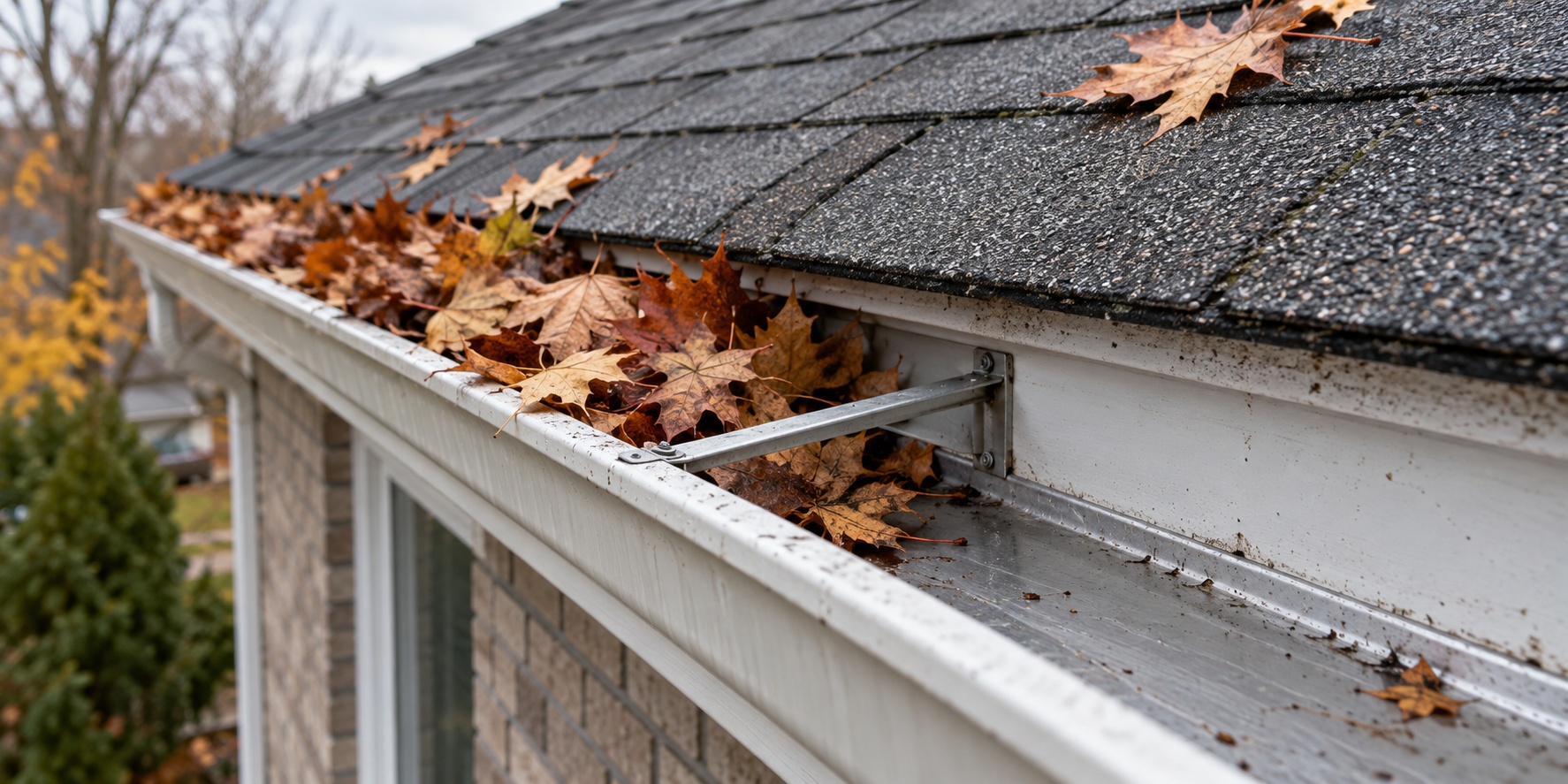
One of the most common questions homeowners ask is how often gutters should be cleaned. The answer depends on your home, your property, and your climate. Some homes need cleaning twice a year. Others need it four times or more. Cleaning too rarely leads to overflowing gutters, water damage, and expensive repairs. Cleaning more often than necessary wastes money and time.
This guide explains how to determine the right cleaning schedule for your home, what factors increase or decrease frequency, and what happens when you wait too long between visits.
Our gutter cleaning can help set a schedule around your roofline and tree cover.
General cleaning frequency for Canadian homes
Most single-family homes in Canada benefit from gutter cleaning at least twice a year. The first visit should happen in spring, after winter debris has accumulated and before spring rains begin. The second visit should happen in autumn, after most leaves have fallen but before snow and freeze-thaw cycles start.
For a typical suburban home with average tree coverage, two visits per year is the standard recommendation. This schedule keeps the system clear through the wettest seasons and reduces the risk of overflow during spring thaw and autumn storms.
Homes with fewer trees and simple rooflines might manage with one cleaning per year, usually in autumn. Homes with heavy tree coverage, complex rooflines, or nearby pine trees may need three or four visits per year.
Here is a general frequency guide:
| Home type | Recommended frequency | Best timing |
|---|---|---|
| Low tree coverage, simple roofline | Once per year | Autumn |
| Average suburban home | Twice per year | Spring and autumn |
| Heavy tree coverage, mature trees | Three to four times per year | Spring, early summer, autumn, early winter |
| Home with gutter guards | Once or twice per year | Spring and autumn inspection |
| Home near pine trees | Three to four times per year | Spring, summer, autumn, winter |
These are starting points, not rules. Your specific property may need more or less frequent attention based on the factors below.
Factors that increase cleaning frequency
Several property characteristics make gutters fill up faster and require more frequent service.
Tree coverage and tree type
The number and type of trees near your roofline is the biggest factor. Deciduous trees such as maple, oak, birch, and elm drop leaves in autumn, which can fill gutters quickly. Coniferous trees such as pine, spruce, and fir drop needles year-round, and pine needles are small enough to slip through some gutter guards and collect in the system.
If your home is surrounded by mature trees, especially within ten feet of the roofline, expect to clean more often. A single large maple tree can drop enough leaves to clog a gutter system in one autumn. Homes in wooded neighbourhoods or on heavily treed lots often need three or four cleanings per year.
Roofline complexity
Simple rooflines with few corners and straight runs collect debris evenly and are easier to clean. Complex rooflines with dormers, valleys, multiple levels, and bay windows create dead spots where leaves and pine needles accumulate. These areas may need attention even if the rest of the system appears clear.
Homes with multiple roof levels also have gutters at different heights. Debris from an upper roof can wash down onto a lower roof and into its gutters, increasing the load on the lower system.
Roof pitch and overhang
Steep roofs shed water and debris faster than low-slope roofs, which can reduce gutter loading. However, steep roofs can also shed debris directly into gutters with more force, potentially causing more impact damage to seams and hangers over time.
Homes with deep roof overhangs may have gutters that are more sheltered from wind-blown debris. Homes with shallow overhangs expose gutters more directly to falling leaves and wind-driven debris.
If debris returns quickly, gutter guard service may reduce how much enters the system.
Nearby construction or land clearing
If your neighbourhood is undergoing construction, or if a nearby lot is being cleared, expect extra debris in your gutters. Soil, wood chips, leaves, and construction material can wash into gutters during rain. Schedule an extra cleaning after any major land disturbance near your property.
Factors that decrease cleaning frequency
Some homeowners can clean less often without risk.
Gutter guards
Gutter guards significantly reduce debris entering the system, but they do not eliminate the need for cleaning. Mesh and screen guards block most leaves, while reverse curve guards shed larger debris. Foam and brush guards need the most attention.
With quality guards, many homeowners can move from three or four cleanings per year down to one or two inspections annually. You should still check the guard surface after heavy leaf fall or storms, and clear any debris that collects on top. Foam and brush guards require the most frequent maintenance and may need removal and rinsing every season or two.
Few or no nearby trees
Homes in new subdivisions with young landscaping, or properties with minimal tree coverage, naturally accumulate less debris. If there are no trees within twenty feet of the roofline, one annual cleaning in autumn may be sufficient.
Arid or low-precipitation climate
Areas with less rainfall and fewer storms may see less debris movement into gutters. However, dry climates can still have wind-blown dust, pollen, and occasional leaf fall, so at least one annual inspection is still recommended.
For a related guide, see Gutter Cleaning Cost Guide for Canadian Homes.
Signs your gutters need cleaning sooner
Regardless of your schedule, watch for these warning signs that your gutters are overdue for attention:
- Water overflowing the gutter edges during rain
- Water pooling near the foundation after a storm
- Gutters sagging or pulling away from the house
- Visible leaves or debris sticking out of the gutter trough
- Plants or weeds growing in the gutters
- Stains or streaks on the exterior walls below the roofline
- Birds or pests nesting in the gutter system
- Ice forming in gutters during winter
If you notice any of these signs, schedule a cleaning immediately rather than waiting for your next planned visit.
What happens when you wait too long
Delaying gutter cleaning leads to problems that cost far more than the service itself.
Clogged gutters cause water to overflow near the foundation. This can contribute to basement leaks, soil erosion, and foundation cracks over time. Water that backs up under the roofline can rot fascia boards, damage soffit, and leak into attics or interior ceilings.
In Canadian winters, clogged gutters worsen ice dams. Water that cannot drain through the system freezes at the roof edge and forces its way under shingles, leading to interior water damage and mould growth.
Standing water and leaf debris also attract insects, rodents, and birds to the roofline. Once pests establish themselves in the gutter system, they can move into the attic or walls.
The cost of repairing water damage, replacing rotted fascia, or fixing foundation issues is almost always higher than the cost of regular gutter cleaning. A system left uncleaned for two or three years may need partial replacement rather than just cleaning.
Another useful read for this project is Annual Gutter Inspection Checklist.
Creating a cleaning schedule that works for your home
Start with the baseline recommendation for your home type, then adjust based on what you observe.
For most suburban homes, begin with two visits per year: one in April or May, and one in October or November. After the first year, note how much debris the crew removed and whether the system overflowed between visits. If gutters were still relatively clean at the second visit, you might reduce to one annual visit. If they were packed with debris or overflowing, add a third visit.
Keep a simple record of each cleaning date, how much debris was removed, and any problems the crew identified. Over time, this record shows you the optimal frequency for your specific property.
If you install gutter guards, schedule an inspection in spring and autumn rather than a full cleaning. Clear the guard surface as needed, and plan for a full service every few years depending on the guard type.
Getting on a maintenance plan
Many gutter cleaning companies offer seasonal maintenance plans. Instead of calling each time, you sign up for two or more visits per year at a set price. The company contacts you when each visit is due, so you do not have to track the schedule yourself.
Maintenance plans often include a slight discount compared to booking individual visits. They also guarantee priority scheduling during busy spring and autumn periods. If you tend to forget about gutter cleaning until you see overflowing water, a plan can be a worthwhile investment.
For additional context, continue with Are Gutter Guards Worth It? A Homeowner's Guide.
Ask whether the plan includes downspout flushing, debris removal, and a basic inspection. Some plans include a written report after each visit noting the condition of the system and any recommended repairs.
Tracking your cleaning schedule
Keep a simple record of each cleaning visit. Note the date, how much debris was removed, whether downspouts were flushed, and any problems the crew identified. After one or two years, this record shows you the optimal frequency for your specific property.
If gutters were still relatively clean at the second visit, you might reduce to one annual visit. If they were packed with debris or overflowing between visits, add a third visit. Adjust based on what you observe rather than following a rigid schedule.
Cleaning after storms
Major storms can fill gutters with branches, leaves, and debris in a single event. After a windstorm or heavy storm with leaves, check your gutters even if it is not yet time for your scheduled cleaning. A quick inspection can catch a blockage before the next rain causes overflow.
Trees and seasonal timing
Different trees drop debris at different times. Maple and oak drop leaves in autumn. Pine and spruce drop needles year-round, with heavier drop in spring and early summer. Elm and birch drop small seeds and catkins in spring. If you have multiple tree types, your gutters may collect debris across several seasons, supporting more frequent cleaning.
New homes and new construction
If you live in a new subdivision, construction debris such as wood chips, soil, and packaging can collect in gutters. Schedule an extra cleaning after any nearby construction or landscaping work. New landscaping with young trees will drop more debris as the trees mature.
Gutter guards and reduced frequency
Gutter guards reduce how often you need professional cleaning, but they do not eliminate it. Mesh and screen guards block most leaves while letting water through. Fine debris such as pine needles and seed pods can still collect on top. Reverse curve guards shed larger debris but may allow small debris to slip through.
With quality guards, many homeowners can move from three or four cleanings per year down to one or two inspections annually. You should still check the guard surface after heavy leaf fall or storms, and clear any debris that collects on top. Foam and brush guards need the most frequent attention and may need removal and rinsing every season or two.
Quick reference FAQ
- How often should I clean gutters with gutter guards? Once or twice per year for inspection, plus surface clearing after heavy leaf fall.
- What happens if I never clean my gutters? Overflow, foundation damage, fascia rot, basement leaks, and ice dams can result.
- Can I clean gutters from the ground? Tools exist, but they are less effective than hands-on cleaning and inspection.
- Do new gutters need cleaning? Yes, even new systems collect debris and should be inspected regularly.
- Is one cleaning per year enough? Only for homes with few trees and simple rooflines. Most homes need two.
Final takeaway
Most Canadian homes need gutter cleaning twice a year, in spring and autumn. Homes with heavy tree coverage may need three or four visits, while homes with few trees or gutter guards may need only one or two. Watch for warning signs such as overflowing water, sagging gutters, or debris visible in the trough. Regular cleaning is far less expensive than the water damage, fascia rot, and foundation problems that neglected gutters can cause. If you are unsure what schedule fits your home, start with two visits per year and adjust based on what you observe.
For an estimate based on your roofline and access, request a free quote.