Commercial and Strata Gutter Maintenance for Property Managers
A practical guide to gutter maintenance for commercial buildings and strata properties, including inspection schedules, budgeting, and vendor management.
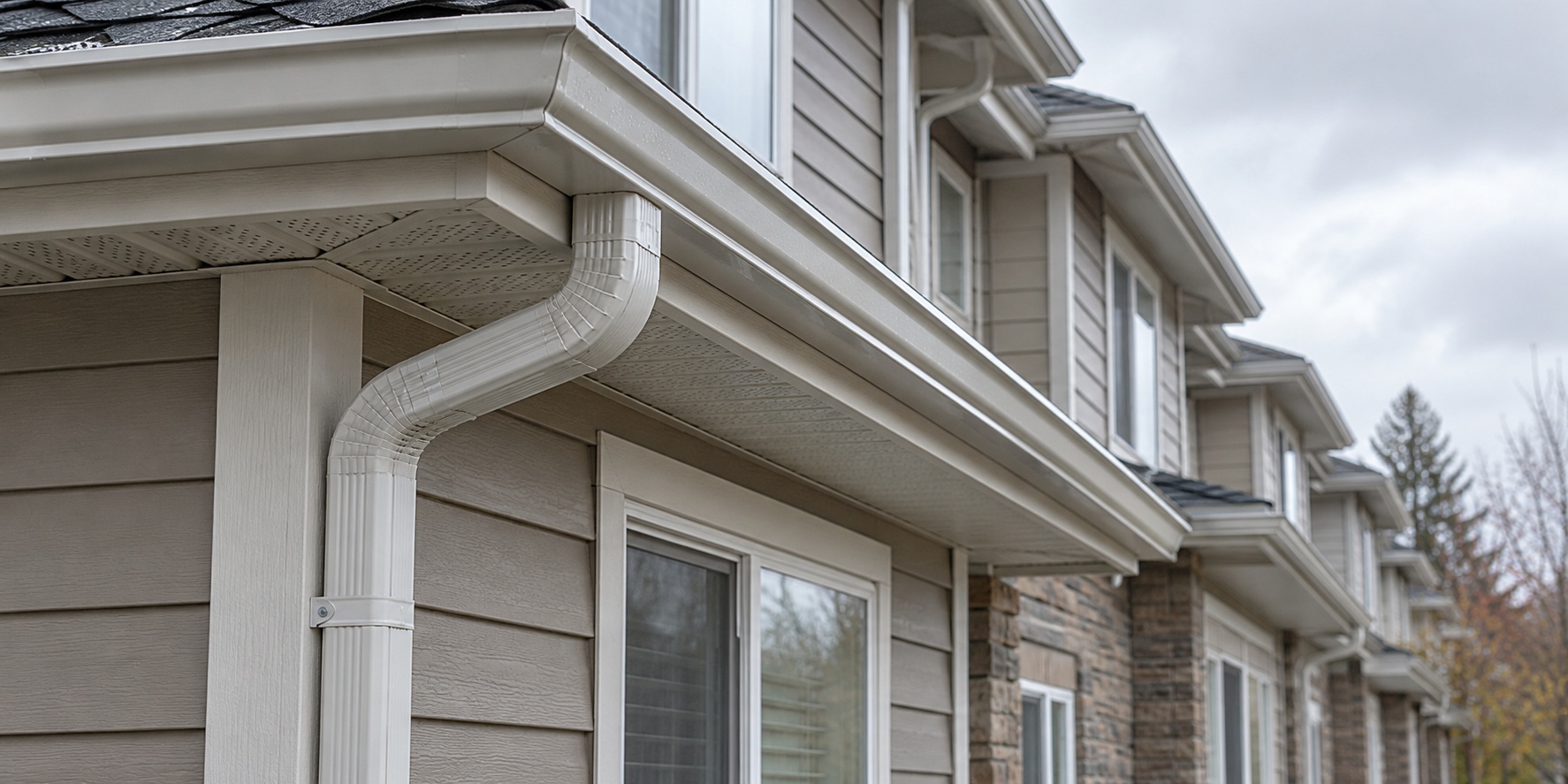
Commercial buildings and strata properties have different gutter needs than single-family homes. Larger roofs, more units, shared responsibility, and higher stakes make gutter maintenance a property management issue, not just a homeowner concern. Blocked gutters on a commercial building can damage inventory, disrupt tenants, and create liability. On a strata property, neglected gutters can lead to special assessments and disputes among owners.
This guide explains how to manage gutter maintenance for commercial and strata properties. It covers inspection schedules, common problems, budgeting, vendor selection, and communication with owners and tenants. It is written for property managers, strata councils, and building owners.
A scheduled gutter cleaning can help keep shared roof drainage clear.
Why commercial and strata gutter maintenance matters
Commercial buildings and strata properties have larger roof areas, more downspouts, and more people affected by water damage than a typical home. A gutter problem on a commercial building can affect multiple businesses. On a strata property, a leak in one unit can lead to claims against the strata corporation.
Water damage risks
Blocked or failing gutters on a commercial building can cause:
- Water entering retail or office space
- Damage to inventory, equipment, or records
- Slip hazards from water at entrances
- Foundation and landscaping erosion
- Mould growth inside walls and ceilings
Strata-specific concerns
Strata properties share common elements. Gutters, downspouts, and roofs are usually common property. The strata corporation is responsible for maintenance. When gutters fail, the cost is shared by all owners through strata fees or special assessments. Individual owners cannot simply fix their own section because the system is shared.
Liability
Property managers and strata councils have a duty to maintain the building. If neglected gutters cause water damage that injures someone or damages property, the corporation or manager may be liable. Regular maintenance records help demonstrate due diligence.
Inspection and maintenance schedule
Commercial and strata properties should follow a regular inspection schedule. Here is a recommended baseline:
| Season | Task | Purpose |
|---|---|---|
| Spring | Full gutter inspection and cleaning | Clear winter debris, check for ice damage |
| Spring | Downspout flush and flow test | Confirm drainage before spring rains |
| Summer | Visual inspection from ground | Check for sagging, leaks, overflow |
| Autumn | Full gutter inspection and cleaning | Clear leaves before winter |
| Autumn | Downspout and extension check | Prepare for snowmelt |
| Winter | Monitor during thaw periods | Watch for ice dams and overflow |
Large commercial buildings or properties with many trees may need inspections every season or after major storms.
Common problems on commercial and strata properties
Larger roof area, more water
Commercial buildings often have large flat or low-slope roofs. More roof area means more runoff. Gutters and downspouts must be sized for the volume. Undersized systems overflow during heavy rain.
More downspouts, more failure points
More downspouts mean more connections, elbows, and potential blockages. Each downspout should be inspected individually.
Shared responsibility
On strata properties, owners may not notice or report gutter problems. A leak on the top floor may not be seen by owners on lower floors. Regular inspections by the strata council or manager catch problems before they spread.
Access challenges
Commercial buildings may be tall or have limited ground access. Equipment, staging, or roof access may be needed. This increases cost and requires safety planning.
Tenant and owner reports
Tenants and owners often notice problems first. Water stains, dripping, or overflow should be reported to management. A clear reporting process helps catch issues early.
Budgeting for gutter maintenance
Gutter maintenance is an operating expense for commercial and strata properties. Budget for:
Regular cleaning
Two to four cleanings per year, depending on tree coverage and building size. Cost depends on building height, roof area, and access.
If debris returns quickly, gutter guard service may reduce how much enters the system.
Repairs
Set aside funds for hanger replacement, seam sealing, downspout repair, and fascia repair. Older buildings need more repairs.
Replacement
Gutters last twenty to thirty years. Plan for eventual replacement through a reserve fund or capital plan. Strata properties should include gutter replacement in their depreciation report.
Emergency fund
Unexpected failures, such as a downspout collapsing during a storm, need immediate attention. An emergency fund avoids delays.
Working with vendors
Property managers and strata councils hire vendors for gutter work. Choosing the right vendor matters.
What to look for
- Experience with commercial or strata properties
- Liability insurance and workers' compensation
- References from other property managers or strata councils
- Written estimates and contracts
- Safety protocols for working at height
- Warranty on materials and labour
Questions to ask vendors
- How many commercial or strata properties do you maintain?
- Can you provide references from similar buildings?
- What is your process for accessing the roof and gutters?
- Do you provide written inspection reports?
- What is your warranty on repairs and cleaning?
- Are you insured for work at height?
Vendor management
Schedule work to minimize disruption to tenants and owners. Coordinate access, notify residents of work dates, and ensure the vendor cleans up after each visit. Keep records of all invoices, reports, and communications.
Communication with owners and tenants
Strata councils and property managers should keep owners and tenants informed about gutter maintenance.
For a related guide, see Annual Gutter Inspection Checklist.
Strata newsletters and meetings
Include gutter maintenance updates in strata newsletters and annual general meetings. Explain why maintenance matters, what was done, and what is planned. This builds understanding and support for strata fees spent on maintenance.
Tenant notices
Notify tenants before gutter work begins, especially if there will be noise, equipment, or access restrictions. Provide a contact for questions or concerns.
Reporting process
Make it easy for tenants and owners to report gutter problems. Provide a phone number, email, or online form. Respond to reports promptly.
Maintenance records
Keep detailed records of:
- Inspection dates and findings
- Cleaning dates and scope
- Repair invoices and warranties
- Vendor contracts and insurance certificates
- Owner and tenant complaints and responses
These records are valuable for insurance claims, depreciation reports, and demonstrating due diligence.
Capital planning for gutter replacement
Strata properties should include gutter replacement in their long-term capital plan. Gutters last twenty to thirty years. Knowing the age and condition of the system helps plan for replacement before failure.
A depreciation report or reserve fund study should include gutter replacement costs. This avoids surprise special assessments when gutters reach the end of their life.
Another useful read for this project is Gutter Cleaning Cost Guide for Canadian Homes.
Signs of gutter problems on commercial and strata properties
Building managers and owners should watch for:
- Water stains on exterior walls below the roofline
- Overflowing gutters during rain
- Sagging or detached gutter sections
- Water pooling near the foundation
- Downspouts discharging onto walkways where ice can form
- Tenant or owner complaints about leaks or dripping
- Ice dams along the roof edge in winter
Real-world examples
Example 1: The strata leak
A strata townhouse complex had leaking gutters on the top row of units. Water entered several units on the top floor. The strata council had not inspected the gutters in three years. The repair involved replacing rotted fascia, re-securing gutters, and repairing interior drywall in four units. The special assessment cost each owner about $800. Regular inspections would have caught the problem earlier for a fraction of the cost.
Example 2: The commercial plaza overflow
A retail plaza had gutters that overflowed during every rainstorm, causing water to pool at store entrances. Customers complained about wet entrances. The property manager inspected the gutters and found they were clogged with leaves and the downspouts were undersized. The contractor cleaned the gutters, added two downspouts, and installed larger gutters on the worst-affected section. The overflow stopped.
Example 3: The strata capital plan
A strata corporation included gutter replacement in its depreciation report. The gutters were twenty-five years old and nearing the end of their life. The strata budgeted $15,000 for gutter replacement over three years. When the gutters finally needed replacement, the funds were available and no special assessment was needed.
Budgeting categories for commercial and strata properties
Operating budget
Regular gutter cleaning and minor repairs are operating expenses. Budget for two to four cleanings per year, depending on building size and tree coverage.
Reserve fund
Gutter replacement is a capital expense. Strata properties should include gutter replacement in their depreciation report or reserve fund study. Commercial properties should include it in their capital plan.
Emergency fund
Unexpected gutter failures, such as a downspout collapsing during a storm, need immediate attention. An emergency fund avoids delays and prevents water damage from getting worse.
For additional context, continue with How Often Should You Clean Your Gutters.
Vendor management for commercial and strata properties
What to look for in a vendor
- Experience with commercial or strata properties
- Liability insurance and workers' compensation
- References from other property managers or strata councils
- Written estimates and contracts
- Safety protocols for working at height
- Warranty on materials and labour
Questions to ask vendors
- How many commercial or strata properties do you maintain?
- Can you provide references from similar buildings?
- What is your process for accessing the roof and gutters?
- Do you provide written inspection reports?
- What is your warranty on repairs and cleaning?
- Are you insured for work at height?
Vendor management best practices
- Schedule work to minimize disruption to tenants and owners
- Coordinate access and notify residents of work dates
- Ensure the vendor cleans up after each visit
- Keep records of all invoices, reports, and communications
- Review vendor performance annually
Communication with owners and tenants
Strata newsletters and meetings
Include gutter maintenance updates in strata newsletters and annual general meetings. Explain why maintenance matters, what was done, and what is planned. This builds understanding and support for strata fees spent on maintenance.
Tenant notices
Notify tenants before gutter work begins, especially if there will be noise, equipment, or access restrictions. Provide a contact for questions or concerns.
Reporting process
Make it easy for tenants and owners to report gutter problems. Provide a phone number, email, or online form. Respond to reports promptly.
Maintenance records
Keep detailed records of:
- Inspection dates and findings
- Cleaning dates and scope
- Repair invoices and warranties
- Vendor contracts and insurance certificates
- Owner and tenant complaints and responses
These records are valuable for insurance claims, depreciation reports, and demonstrating due diligence.
Capital planning for gutter replacement
Strata properties should include gutter replacement in their long-term capital plan. Gutters last twenty to thirty years. Knowing the age and condition of the system helps plan for replacement before failure.
A depreciation report or reserve fund study should include gutter replacement costs. This avoids surprise special assessments when gutters reach the end of their life.
Signs of gutter problems on commercial and strata properties
Building managers and owners should watch for:
- Water stains on exterior walls below the roofline
- Overflowing gutters during rain
- Sagging or detached gutter sections
- Water pooling near the foundation
- Downspouts discharging onto walkways where ice can form
- Tenant or owner complaints about leaks or dripping
- Ice dams along the roof edge in winter
Final takeaway
Commercial and strata properties need regular gutter maintenance because of larger roofs, shared responsibility, and higher stakes. Inspect at least twice a year, clean as needed, budget for repairs and replacement, hire qualified vendors, and keep detailed records. Communication with owners and tenants prevents surprises. Regular maintenance protects the building, avoids special assessments, and reduces liability. If your strata or commercial property has not had a gutter inspection recently, schedule one before the next rainy season.
For an estimate based on your roofline and access, request a free quote.