Downspout Drainage and Foundation Protection
How downspout placement, extensions, and drainage protect your foundation from water damage, erosion, and basement leaks.
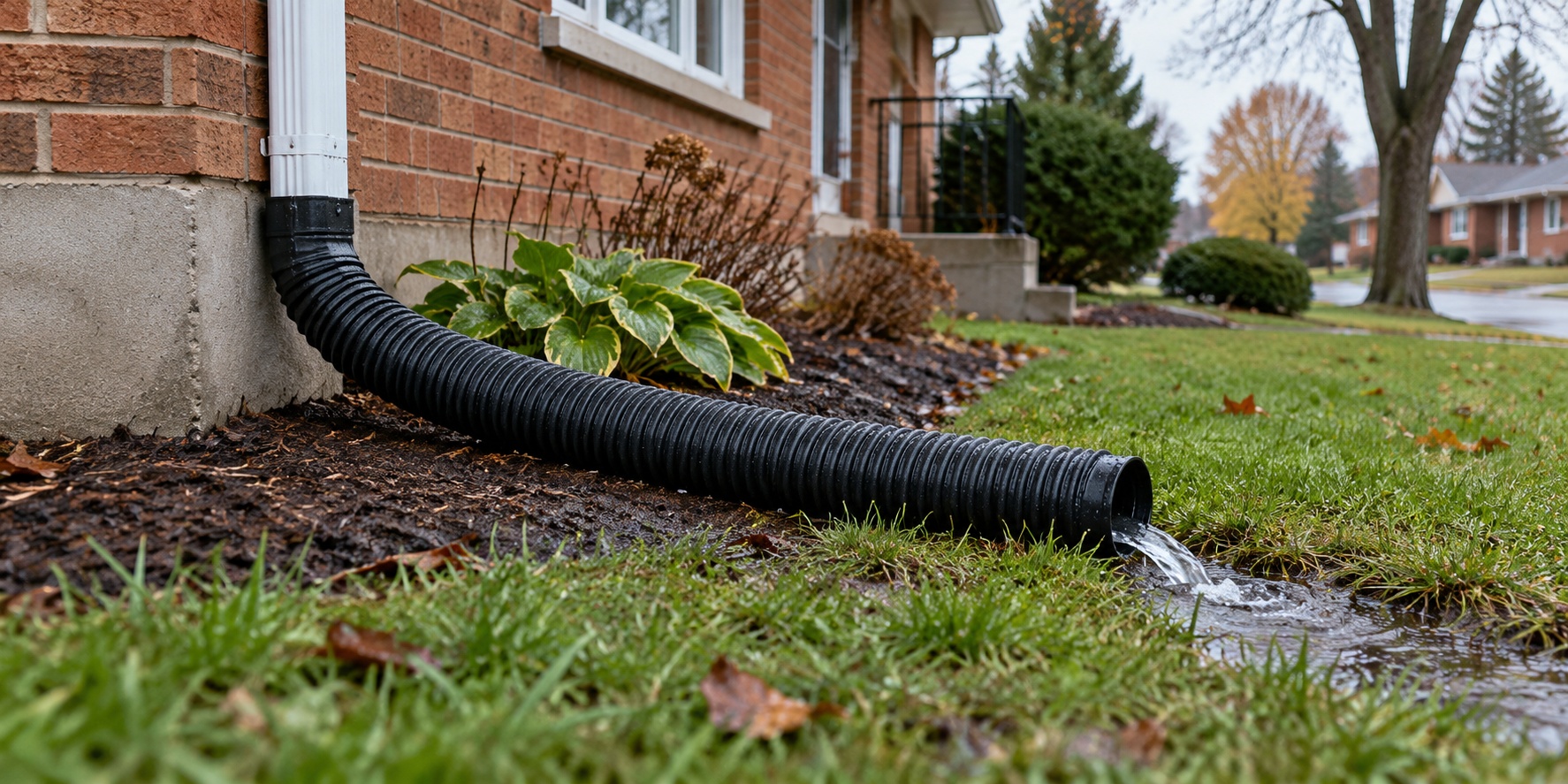
Downspouts are the final step in your gutter system. They carry water from the gutters to the ground and away from your home. Where downspouts discharge matters as much as the gutters themselves. Poorly placed or missing downspouts can lead to foundation cracks, basement leaks, soil erosion, and landscape damage.
This guide explains how downspout drainage works, what affects placement, and what options are available to protect your home. It is written for homeowners who want to understand how water moves off their property and how to keep it away from the foundation.
Our downspout service can help address discharge that collects near the foundation.
What downspouts do
Gutters collect water from the roof and move it along the roofline. Downspouts take that water from the gutters and carry it vertically to the ground. From there, the water needs to discharge onto ground that slopes away from the house, not onto walkways, driveways, or directly beside the foundation.
A complete drainage system includes gutters, downspouts, outlets, elbows, extensions, and splash blocks. Each part has a role. If any part fails, water can pool where it should not.
Why downspout placement matters
Water discharged too close to the foundation can seep into the soil around the basement walls. Over time, this moisture can contribute to basement leaks, foundation cracks, and mould growth. It can also erode the soil that supports the foundation, leading to settlement issues.
Downspouts should discharge at least several feet away from the house, onto ground that slopes away from the foundation. The exact distance depends on your lot, soil type, and local drainage patterns. On a flat lot or a lot that slopes toward the house, you may need extensions or underground drainage to move water further out.
How many downspouts do you need
The number of downspouts depends on your roofline length, roof area, and local rainfall. A general rule is one downspout for every 30 to 40 feet of gutter, but homes with large roof areas, steep pitches, or heavy rainfall may need more.
Too few downspouts means each one has to handle more water. During heavy rain, gutters can overflow even if they are clean, because the downspouts cannot carry water away fast enough. Too many downspouts is rarely a problem, but each one adds cost and needs its own discharge path.
Here is a general guide:
| Roofline length | Suggested downspout count |
|---|---|
| Up to 60 feet | 2 downspouts |
| 60 to 100 feet | 3 downspouts |
| 100 to 150 feet | 4 to 5 downspouts |
| 150+ feet | 5+ downspouts |
A contractor can measure your roof area and recommend the right number and placement.
Downspout extensions and splash blocks
When a downspout discharges too close to the foundation, an extension moves the water further out. Extensions are typically flexible or rigid pipes that attach to the bottom of the downspout and direct water away from the house.
Splash blocks are concrete or plastic blocks placed at the downspout outlet. They prevent erosion at the discharge point and help spread water out. They are useful when the downspout discharges onto soil or landscaping.
Extensions cost roughly $15 to $40 each installed, depending on length and material. Splash blocks are less expensive but need to be positioned correctly and may shift over time.
Underground drainage options
On some properties, surface discharge is not practical. The lot may slope toward the house, there may be no suitable discharge area, or local bylaws may restrict where water can go. In these cases, underground drainage can carry water further from the home.
Underground systems connect the downspout to a buried pipe that carries water to a dry well, a storm drain, or a lower part of the lot. They cost more than surface extensions because they require excavation, but they are effective on challenging lots.
If the drainage layout needs a wider update, explore gutter installation as part of the plan.
Underground drainage is especially useful in urban areas with small lots, where water discharged at the surface can flow onto a neighbour's property or onto a sidewalk.
Soil type and drainage
Your soil type affects how quickly water absorbs and where it goes. Clay soil drains slowly and holds water near the surface, which increases the risk of pooling near the foundation. Sandy soil drains quickly but can erode more easily.
If you have clay soil, extensions and proper grading are especially important. If you have sandy soil, splash blocks and erosion control matter more.
Grading and landscaping
The ground around your foundation should slope away from the house at a gentle grade, typically about one inch per foot for the first six to ten feet. This grade helps water move away naturally. If the ground slopes toward the house, or if it is flat, water can collect against the foundation even with good downspouts.
Landscaping can help or hurt. Garden beds next to the foundation can trap water if they are bordered by edging that prevents drainage. Mulch holds moisture, so keep it pulled back from the foundation walls. Trees and shrubs planted too close to the house can also affect soil moisture and root growth near the foundation.
Signs of poor downspout drainage
Watch for these warning signs:
For a related guide, see Clogged Downspout: How to Unclog and Prevent.
- Water pooling near the foundation after rain
- Soil erosion or washed-out mulch around downspout outlets
- Basement dampness or musty smells
- Foundation cracks, especially horizontal or stair-step cracks
- Gutters overflowing even when clean
- Downspouts discharging onto walkways or driveways where water can freeze
If you notice any of these signs, your downspout placement or drainage may need adjustment.
Seasonal considerations
In winter, downspout outlets can freeze, blocking drainage. Make sure extensions and splash blocks are positioned so ice does not block the flow. In spring, check that meltwater is moving away from the foundation and not ponding near basement windows.
After heavy rain, walk around your home and check where water is going. If you see water running toward the house or pooling near the foundation, take action before the next storm.
Getting a drainage assessment
If you are unsure whether your downspouts are placed correctly, a contractor can assess your lot, roof area, and soil type. They can recommend the right number and location of downspouts, whether extensions are needed, and whether underground drainage is appropriate.
For homeowners in Hamilton and surrounding communities, request a free written estimate to discuss your downspout and drainage needs. Proper drainage is one of the most affordable ways to protect your foundation from water damage.
Regional drainage considerations across Canada
Drainage needs vary by region due to rainfall, snowmelt, soil type, and local bylaws.
Another useful read for this project is Rain Barrels and Gutters: Rainwater Harvesting for Canadian Homes.
In Ontario and Quebec, spring snowmelt and summer thunderstorms create high volumes of water that must move away from foundations quickly. Clay soil in parts of southern Ontario drains slowly, making extensions and proper grading especially important.
In British Columbia, frequent rain throughout the year means downspouts are tested constantly. Coastal areas deal with salt air and heavy rainfall, while interior regions face dry summers followed by intense autumn storms.
In Alberta and the Prairies, chinooks and rapid snowmelt can create sudden water volume. Dry summer soil can become hydrophobic, meaning it repels water at first, then becomes saturated. Spring melt can overwhelm downspouts that were adequate in summer.
In Atlantic Canada, coastal salt air and heavy precipitation accelerate corrosion of downspouts and extensions. High water tables in some areas mean the ground is already saturated, leaving little capacity for roof runoff.
Local municipalities may have bylaws about where downspout water can discharge. Some prohibit discharging onto sidewalks or into storm sewers without permission. Check your local rules before installing extensions or underground drainage.
The cost of foundation water damage
Water near the foundation is one of the most expensive problems a homeowner can face. Foundation crack repair can cost $500 to $3,000 per crack depending on severity and access. Basement waterproofing can range from $3,000 to $15,000 or more for interior systems, and exterior waterproofing with excavation can cost significantly more. Soil erosion around the foundation may require regrading and retaining wall repairs.
A few hundred dollars spent on downspout extensions and proper grading can prevent thousands in foundation repairs. The math strongly favours prevention.
For additional context, continue with Why Gutter Pitch and Slope Matter for Canadian Homes.
Insurance considerations
Home insurance may cover sudden water damage from a burst pipe or storm, but gradual seepage from poor drainage is often excluded. If an insurer determines that water entered the basement because downspouts discharged against the foundation for months or years, they may deny the claim as a maintenance issue.
Before problems arise, review your policy to understand what water damage is covered. Keep records of gutter cleaning, downspout maintenance, and drainage improvements. Photos of your drainage setup can support a claim if you ever need to make one.
Downspout materials and durability
Downspouts come in several materials, each with different durability and cost:
| Material | Approximate cost | Lifespan | Notes |
|---|---|---|---|
| Aluminum | $8 - $15 per linear foot | 20 to 30 years | Resists rust, common choice |
| Vinyl | $5 - $10 per linear foot | 10 to 15 years | Can become brittle in cold |
| Steel | $12 - $20 per linear foot | 20 to 30 years | Strong, needs coating |
| Copper | $25 - $40+ per linear foot | 50+ years | Premium, develops patina |
Match downspout material to your gutter material where possible for appearance and compatibility. Aluminum downspouts pair with aluminum gutters and are the most common choice in Canada.
Drainage assessment checklist
When assessing your downspout drainage, check:
- Do all downspouts discharge at least several feet from the foundation?
- Does the ground slope away from the house at each outlet?
- Are extensions intact and positioned correctly?
- Are splash blocks in place and not shifted?
- Is there pooling near any downspout after rain?
- Are downspouts discharging onto walkways where ice can form in winter?
- Are any downspouts blocked, bent, or disconnected?
- Is soil eroding around any outlet?
Walk around your home during or immediately after a rainstorm to see exactly where water goes. This is the best way to identify problems that are not visible in dry weather.
Getting a drainage assessment
If you are unsure whether your downspouts are placed correctly, a contractor can assess your lot, roof area, and soil type. They can recommend the right number and location of downspouts, whether extensions are needed, and whether underground drainage is appropriate.
For homeowners in Hamilton and surrounding communities, request a free written estimate to discuss your downspout and drainage needs. Proper drainage is one of the most affordable ways to protect your foundation from water damage.
Quick reference FAQ
- How far should downspouts discharge from the foundation? At least several feet, onto ground that slopes away.
- Can I bury my downspouts? Yes, underground drainage is an option when surface discharge is not practical.
- Do I need downspouts on every corner? Not every corner, but every major roofline section needs drainage.
- How do I know if my downspout is blocked? Water overflows from the gutter above it, or no water exits the bottom during rain.
- Can downspouts discharge onto my driveway? Avoid this. Water can freeze on the walkway and create a slip hazard.
Final takeaway
Downspouts carry gutter water away from your home, but where they discharge matters. Water should exit several feet from the foundation onto ground that slopes away. Extensions, splash blocks, and underground drainage can help on challenging lots. Too few downspouts, poor placement, or negative grading can lead to basement leaks, erosion, and foundation damage. Regular checks after rain and seasonal maintenance keep your drainage system working as it should.
For an estimate based on your roofline and access, request a free quote.