Why Gutter Pitch and Slope Matter for Canadian Homes
A detailed look at gutter pitch and slope, why correct drainage angle matters, and what happens when gutters are not pitched properly.
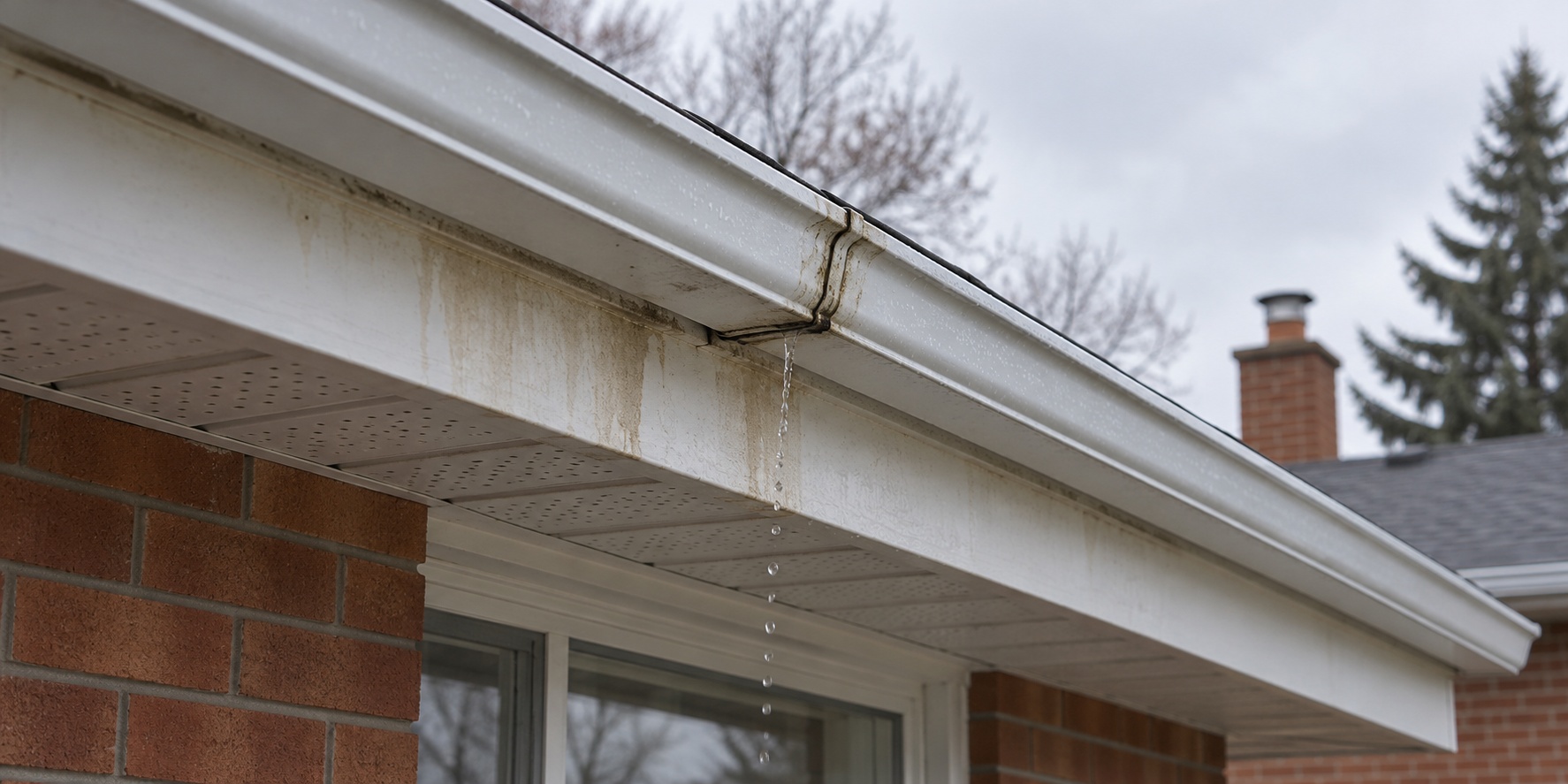
Gutter pitch and slope are two of the most overlooked parts of a gutter system. Homeowners often focus on the material, the colour, or the brand, but they rarely think about whether the gutters are angled correctly. Yet pitch and slope determine whether water actually leaves your roof or sits in the gutter until it overflows, leaks, or freezes.
This guide explains what gutter pitch and slope mean, why the correct drainage angle matters, how to tell whether your gutters are pitched wrong, and what to do about it. It is written for homeowners who want to understand the mechanics of their drainage system before problems start.
Our gutter installation can check the pitch and outlet layout along your roofline.
What gutter pitch and slope mean
Pitch and slope refer to the same concept: the downward angle of the gutter from one end to the downspout. Gutters are not meant to be perfectly level. They need a slight decline so gravity can move water toward the outlet instead of letting it pool.
In the gutter industry, the standard recommendation is usually about a quarter inch of drop for every ten feet of gutter run. That means a thirty-foot section should be roughly three-quarters of an inch lower at the downspout end than at the opposite end. This small angle is enough to keep water moving without being noticeable from the ground.
When a gutter is level or, worse, sloped the wrong way, water collects in the middle or at the far end. It sits there until it evaporates, overflows, or freezes. Standing water adds weight, stresses the hangers, and accelerates rust or corrosion in metal systems.
Why correct pitch matters
Correct pitch affects every part of gutter performance. Without it, even the best material and the strongest hangers cannot keep the system working.
Water drainage
The primary job of a gutter is to move roof water to the downspout and away from the foundation. If the pitch is wrong, water does not flow. It pools. Pooled water overflows during rain, runs down the fascia, and can splash back onto the roof or into the landscaping. In heavy rain, a poorly pitched gutter can dump hundreds of gallons of water in the wrong place.
Weight and stress
Water is heavy. One cubic foot of water weighs about sixty-two pounds. A gutter section holding standing water can add significant weight between hangers. Over time, this extra load pulls hangers loose, bends the gutter, and can cause sections to sag or detach from the fascia entirely.
Ice and freeze-thaw damage
In Canadian winters, standing water is especially dangerous. It freezes at the gutter edge, expands, and can warp the metal or crack the sealant. Ice dams form more easily when water cannot drain. A correctly pitched gutter sheds meltwater faster, reducing the time water has to freeze.
Mosquitoes and pests
Standing water in gutters becomes a breeding ground for mosquitoes and attracts other pests. Birds, rodents, and insects are drawn to the moisture and the debris that collects with it. Clean, flowing gutters are less inviting to unwanted visitors.
How to tell whether your gutters are pitched wrong
You do not need to climb a ladder to spot many pitch problems. Walk around your home during or after a rainstorm and look for these signs:
- Water overflowing the gutter edges even when the gutters are clean
- Standing water visible in the gutter after the rain stops
- Gutters that sag in the middle or pull away from the fascia
- Water stains or streaks on the fascia board below the gutter
- Soil erosion or washed-out mulch directly under the gutter overflow points
- Basement dampness after rain, even though downspouts appear to be connected
If you can safely use a ladder, look inside the gutter. Water should flow toward the downspout without collecting. If you see puddles, the pitch is wrong.
Causes of incorrect pitch
Several things can cause gutters to lose their slope over time.
Hanger failure
Gutter hangers are the brackets that fasten the gutter to the fascia. If hangers loosen, rust, or pull out of the wood, that section of gutter can droop. A drooping section creates a low point where water collects. Replacing or re-securing hangers often fixes the problem without replacing the whole gutter.
Settling and shifting
Houses settle. Foundations shift slightly over the years. Even a small movement of the roofline can change the angle of a long gutter run. A system that was pitched correctly when installed may no longer drain correctly ten years later.
If the issue is limited to one area, a targeted gutter repair may be more practical.
Poor original installation
Some gutters are installed level because the installer did not measure the slope or did not use a level. Others are installed with too much slope, which causes water to rush to the downspout too quickly and can lead to overflow at the outlet during heavy rain. Both extremes are problems.
Damage from ice, snow, or debris
Heavy snow and ice can bend gutters. A tree branch falling on the gutter can create a low spot. Once the gutter is bent, water collects in the damaged section and the problem gets worse with every rain.
Measuring and correcting gutter pitch
Correcting gutter pitch is a job for a professional in most cases, but understanding the process helps you evaluate a contractor's work.
Measuring the slope
A contractor will use a level or a laser level to measure the drop along the gutter run. The goal is a consistent decline toward the downspout. If there are multiple downspouts, each section between outlets should slope toward its nearest outlet.
Adjusting hangers
In many cases, the fix is to adjust or replace hangers so the gutter sits at the correct angle. The contractor may add new hangers, move existing ones, or install stronger fasteners if the wood is damaged.
Re-pitching sections
If a section is bent or damaged, it may need to be removed and re-hung at the correct angle. For seamless gutters, a contractor can form a new piece on site to match the roofline. For sectional gutters, the damaged section can be replaced.
Pitch and downspout placement
Pitch works together with downspout placement. A long gutter run with only one downspout at the far end needs a consistent slope across its entire length. If you have two downspouts, each section should slope toward its own outlet. Downspouts that are too far apart create long runs where water has more time to pool if the pitch is off.
For a related guide, see Downspout Drainage and Foundation Protection.
A contractor should consider downspout placement when setting the pitch. Water should never have to travel more than thirty to forty feet along a gutter before reaching an outlet.
Canadian winter considerations
Freeze-thaw cycles make pitch even more important in Canada. Water that pools in a gutter during the day can freeze overnight. As ice builds up, it can push the gutter out of pitch or damage the hangers. A correctly pitched gutter sheds meltwater before it has time to freeze.
Ice dams form more easily when water cannot drain. A pitched gutter is not a complete solution to ice dams, but it reduces the amount of water available to freeze at the roof edge.
Questions to ask your contractor
When requesting a gutter estimate or repair, ask these questions:
- What pitch will you use for my gutter runs?
- How will you measure and verify the slope after installation?
- Will each section between downspouts slope toward its own outlet?
- What hanger type and spacing will you use to hold the pitch?
- If my gutters are sagging, will you re-pitch them or just add hangers?
- Do you check fascia condition before setting the pitch?
A contractor who can answer these questions clearly understands how drainage works. One who says gutters should be level does not.
How to measure gutter pitch yourself
You can check your gutter pitch without climbing onto the roof. Here is a simple method:
- Wait for a rainstorm or simulate rain with a garden hose
- Watch the gutter during and after the rain
- Look for water that pools in the middle of a run or flows away from the downspout
- Check whether water stands in the gutter after the rain stops
If you can safely use a ladder, place a level on the inside bottom of the gutter. The bubble should show a slight decline toward the downspout. A level that reads perfectly flat means the gutter has no pitch and will not drain properly.
Another useful read for this project is Gutter Noise: Dripping, Gurgling, and Overflowing Sounds Explained.
For a more precise measurement, measure the vertical drop over a horizontal distance. On a twenty-foot gutter run, you should see roughly half an inch of drop from the high end to the low end. If there is no drop, or if the high and low ends are reversed, the pitch needs correction.
Cost of correcting gutter pitch
The cost to fix gutter pitch depends on the cause and the extent of the problem:
| Issue | Approximate cost | What it involves |
|---|---|---|
| Adjusting existing hangers | $150 - $350 | Re-securing or repositioning hangers to set correct slope |
| Adding new hangers | $200 - $500 | Installing additional hangers to support proper pitch |
| Re-pitching a section | $300 - $700 | Removing and re-hanging a gutter section at correct angle |
| Replacing a damaged section | $400 - $900 | Removing bent section, forming new piece, installing |
| Full re-pitch of all runs | $800 - $1,500+ | Adjusting every gutter run on the home |
These are estimates. A full inspection will reveal the actual scope. Correcting pitch is almost always cheaper than repairing water damage to fascia, soffit, basement, or foundation.
Real-world examples
Example 1: The sagging middle section
A homeowner noticed water overflowing from the middle of a thirty-foot gutter run during moderate rain. The ends of the gutter were fine, but the middle sagged an inch or two. The cause was two missing hangers in that section. The contractor replaced the hangers, re-set the pitch, and the overflow stopped. Cost: under $300.
Example 2: The reversed slope
A homeowner installed sectional gutters as a DIY project. The gutters were installed level at best, and one section actually sloped away from the downspout. Water pooled at the far end and froze every winter. The contractor removed and re-hung the affected sections with correct pitch. Cost: about $600.
Example 3: The settled home
A twenty-year-old home developed foundation settlement. One corner of the house dropped slightly, which changed the pitch of the gutter along that side. Water began pooling near the foundation. The contractor re-pitched the affected run and added hangers. Cost: about $450.
Pitch and different gutter materials
Aluminum
Aluminum gutters hold pitch well when hangers are properly spaced. Aluminum is lightweight, so it does not sag as easily as some materials. However, aluminum can dent, and a dented section can create a local low point that holds water.
For additional context, continue with Ice Dams and Gutters in Canadian Winters.
Steel
Steel is heavier than aluminum. If hangers are spaced too far apart, steel gutters can sag between hangers. Steel needs closer hanger spacing to maintain pitch over time.
Copper
Copper is heavy and durable. It holds pitch well but requires strong hangers. Copper gutters are often installed on heritage homes where appearance matters as much as performance.
Vinyl
Vinyl is lightweight but flexible. It can sag between hangers more easily than aluminum or steel. Vinyl gutters need closer hanger spacing to maintain pitch.
Seasonal pitch checks
Check your gutter pitch at key times of the year:
Spring
After winter, check whether ice and snow have bent or pulled gutters out of pitch. Look for sections that now hold water.
Autumn
Before winter, confirm that gutters are pitched correctly so meltwater and rain can drain before freezing.
After major storms
High winds and heavy rain can shift hangers or bend gutters. Check pitch after any significant storm.
DIY versus professional pitch correction
Minor hanger adjustments can be a DIY project if you are comfortable on a ladder and have the right tools. However, re-pitching long runs, removing and reinstalling seamless gutters, or working on two-storey homes is best left to professionals. Professionals have the tools to form seamless gutters on site and the experience to set correct pitch without damaging the fascia.
Final takeaway
Gutter pitch and slope are not minor details. They determine whether your gutters actually drain. A quarter inch of drop per ten feet is the standard target, and it makes the difference between a system that moves water away from your home and one that holds water until it causes damage. Watch for overflow, sagging, and standing water after rain. If your gutters are not pitched correctly, a re-pitch or hanger adjustment is often a simple fix that prevents much bigger problems.
For an estimate based on your roofline and access, request a free quote.