Rain Barrels and Gutters: Rainwater Harvesting for Canadian Homes
A practical guide to connecting rain barrels to gutters, including benefits, costs, installation, and winter considerations for Canadian homeowners.
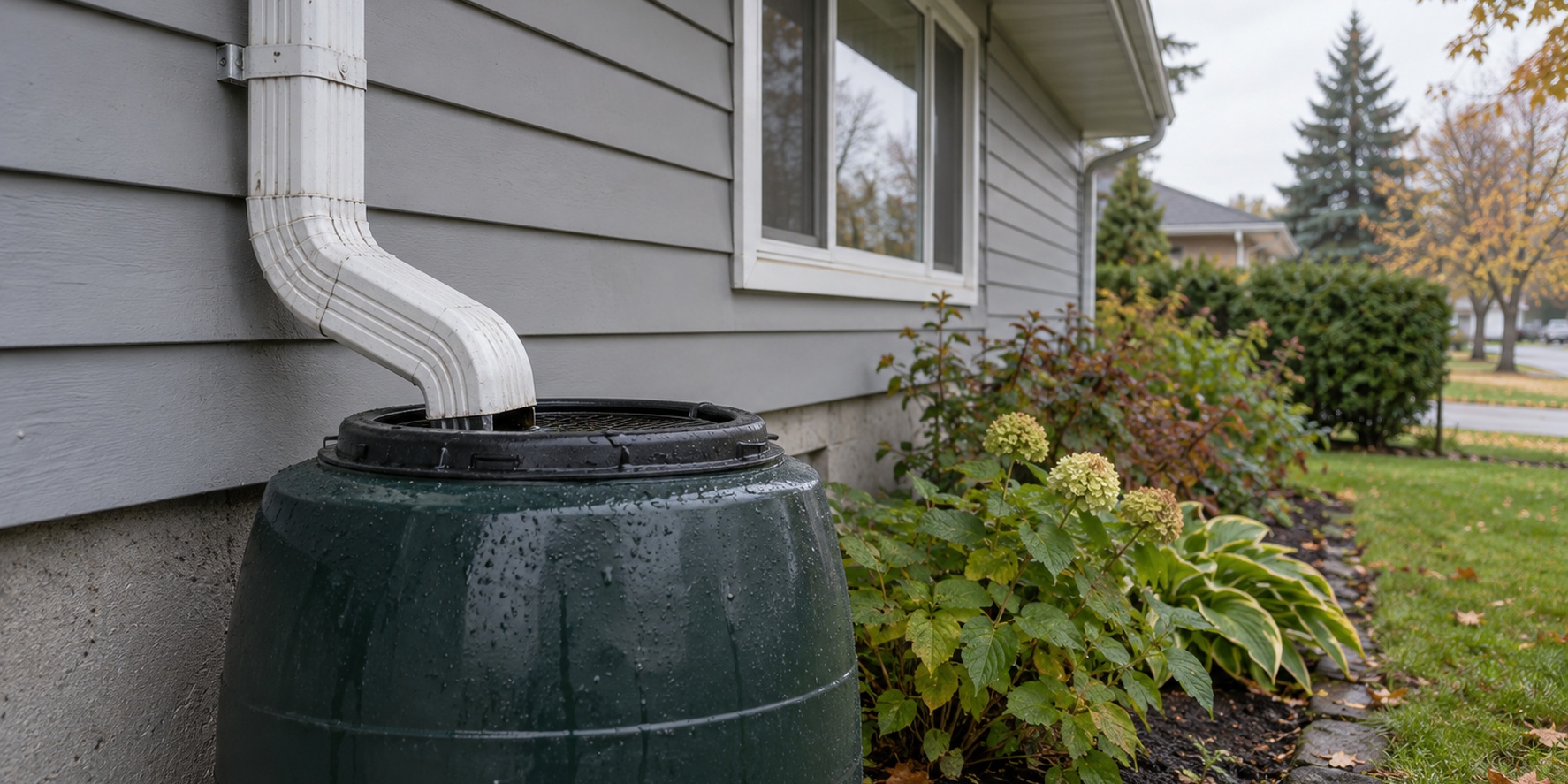
Rain barrels connected to gutters let homeowners collect and reuse roof runoff. This is called rainwater harvesting. It is a practical way to reduce municipal water use, lower water bills, and protect the foundation from excess water near the house. In Canada, where summers can be dry and water restrictions sometimes apply, stored rainwater is useful for gardens and lawns.
This guide explains how rain barrels work with gutters, what benefits they offer, what they cost, how to install them, and what to do in winter. It is written for homeowners who want to make better use of the water that already runs off their roof.
Our downspout service can help plan the outlet and extension around a collection system.
What rain barrels are
A rain barrel is a container that collects water from a downspout. It sits at the base of the downspout and stores runoff from the roof. Most rain barrels hold between two hundred and four hundred litres. They have a spigot near the bottom for filling watering cans or attaching a hose, and an overflow outlet near the top to direct excess water away from the foundation.
Rain barrels are not a new idea. People have collected rainwater for centuries. Modern rain barrels are made of plastic, wood, or metal and are designed to connect directly to residential downspouts.
How rain barrels connect to gutters
A rain barrel connects to the gutter system at the downspout. Instead of downspout water discharging directly onto the ground, it flows into the barrel. Here is how the connection works:
- Water runs off the roof into the gutters
- Gutters carry water to the downspout
- The downspout directs water into the rain barrel through a diverter or direct connection
- The barrel fills during rain
- You use the stored water for outdoor tasks
- When the barrel is full, excess water flows through the overflow outlet and away from the foundation
Downspout diverters
A downspout diverter is a device installed in the downspout that sends water into the barrel when it is not full and allows water to bypass the barrel when it is full. Diverters are useful because they prevent overflow around the barrel and make the system easier to manage.
Direct connection
Some rain barrels connect directly to the downspout with a cut section of pipe. This is simpler but requires more care to manage overflow when the barrel is full.
Overflow management
Overflow management is critical. When the barrel is full, excess water must go somewhere. It should be directed away from the foundation, ideally to the same place the downspout would normally discharge. An overflow hose or pipe connected to the barrel's top outlet can carry water to a garden bed, a lawn area, or a drainage swale.
Benefits of rain barrels
Lower water bills
Using stored rainwater for outdoor tasks reduces municipal water use. In municipalities that meter water, this can lower your bill. Even in flat-rate areas, reducing water use is good practice.
Water for gardens and lawns
Rainwater is good for plants. It is free of chlorine and fluoride, which are added to municipal water. It is also at ambient temperature, which is gentler on plants than cold tap water. Use rain barrel water for watering gardens, lawns, trees, and shrubs.
Foundation protection
When a rain barrel captures downspout water, less water pools near the foundation during rain. This reduces the risk of basement leaks, soil erosion, and foundation cracks. The overflow outlet should still direct water away from the house.
Water restrictions
During dry summers, some municipalities restrict outdoor watering. Having stored rainwater lets you continue watering gardens during restrictions. Check your local rules, as some areas regulate rainwater harvesting.
Environmental benefits
Collecting rainwater reduces demand on municipal water systems and reduces stormwater runoff. Less runoff means less strain on municipal drainage systems and less pollution carried into local waterways.
Costs of rain barrels
Rain barrel price
Rain barrels cost between eighty and three hundred dollars, depending on size, material, and features. Basic plastic barrels are at the lower end. Barrels with built-in diverters, spigots, and stands cost more.
If the drainage layout needs a wider update, explore gutter installation as part of the plan.
Installation cost
DIY installation is possible for many homeowners. A downspout diverter kit costs twenty to sixty dollars. Basic tools and a few hours of work are usually enough. Professional installation costs more but ensures proper connection and overflow management.
Additional costs
You may need a stand to elevate the barrel, which improves water pressure for the spigot. You may need an overflow hose or pipe. You may need a screen to keep debris and mosquitoes out. These add twenty to one hundred dollars to the total.
Installation steps
Installing a rain barrel is straightforward. Here is the basic process:
- Choose a downspout that is easy to access and close to where you will use the water
- Place the barrel on a level, stable surface near the downspout
- Elevate the barrel on a stand if you want better water pressure
- Install a downspout diverter or cut the downspout to connect to the barrel
- Connect the overflow outlet to a hose or pipe that directs water away from the foundation
- Install a screen on the barrel opening to keep debris and mosquitoes out
- Test the system during the next rain
Winter considerations for Canada
Canadian winters require special attention. Rain barrels should not be used during freezing weather.
Empty before winter
Before the first hard freeze, empty the rain barrel completely. Water left in the barrel will freeze and can crack the plastic or damage the spigot. Disconnect the downspout diverter and reconnect the downspout so water discharges directly to the ground as it did before.
Store or cover
Store the barrel in a shed or garage if possible. If you must leave it outside, turn it upside down or cover it securely so it does not collect snow and ice.
For a related guide, see Downspout Drainage and Foundation Protection.
Reconnect in spring
Reconnect the barrel in spring after the risk of freezing has passed. Check the spigot, the screen, and the overflow connection before using it again.
What rain barrel water can and cannot be used for
Safe uses
Rain barrel water is suitable for:
- Watering gardens and vegetable beds
- Watering lawns and shrubs
- Filling watering cans for potted plants
- Washing outdoor tools and equipment
Unsafe uses
Do not use rain barrel water for:
- Drinking or cooking
- Bathing or showering
- Filling swimming pools or hot tubs
- Watering edible plants if you are concerned about roof contaminants
Rainwater runs off the roof and can pick up debris, bird droppings, chemicals from shingles, and pollutants from the air. It is not potable unless it is filtered and treated. If you water edible plants, apply water to the soil, not directly to the leaves or fruit.
Mosquito and debris prevention
An uncovered rain barrel becomes a mosquito breeding ground and a trap for leaves and debris. Use a fine-mesh screen over the opening and keep it in place. Empty the barrel regularly so water does not sit for weeks. If you notice mosquito larvae, empty the barrel and clean it.
Roof and gutter condition matters
Rain barrels work best with clean gutters and a sound roof. If your gutters are clogged, leaking, or overflowing, the barrel will not collect much water, and debris will enter the barrel. Clean and repair your gutters before installing a rain barrel.
If your roof is old or shedding granules, the water may contain more debris. Consider the roof condition before investing in a rain barrel system.
Another useful read for this project is Clogged Downspout: How to Unclog and Prevent.
Multiple barrels and larger systems
Some homeowners connect multiple barrels to capture more water. Barrels can be linked with overflow pipes so that when one fills, water flows to the next. Larger systems are possible but require more planning, stronger stands, and better overflow management.
For most homeowners, one or two barrels are enough for garden watering. Larger systems are better suited to properties with large gardens or high water needs.
Local regulations and incentives
Some municipalities offer rebates for rain barrels. Others have rules about where rain barrels can be placed or how overflow must be managed. Check with your local municipality before installing.
Real-world rain barrel examples
Example 1: The single barrel garden
A homeowner with a vegetable garden installed one 200-litre rain barrel on the rear downspout. During a typical summer rainstorm, the barrel filled in about twenty minutes. The homeowner used the stored water for the garden and saved about $40 on water bills over the summer. Cost: about $150 for the barrel and diverter.
Example 2: The dual barrel system
A homeowner with a large lawn installed two linked rain barrels on the front and rear downspouts. The barrels held 400 litres total. The overflow from the first barrel flowed into the second. The homeowner used the water for the lawn and flower beds. Cost: about $350 for both barrels and diverters.
Example 3: The winter mistake
A homeowner left a rain barrel connected through the first hard freeze. Water inside the barrel froze and cracked the spigot. The barrel leaked when reconnected in spring. The homeowner had to replace the spigot and learned to empty and disconnect the barrel before winter. Cost: about $30 for the replacement spigot.
For additional context, continue with Why Gutter Pitch and Slope Matter for Canadian Homes.
Rain barrel water quality
Rainwater runs off the roof and can pick up:
- Leaves, pine needles, and organic debris
- Bird droppings
- Chemicals from asphalt shingles
- Pollutants from the air
- Dust and dirt
This means rain barrel water is not safe for drinking, cooking, or bathing. It is suitable for outdoor watering. If you water edible plants, apply water to the soil at the base of the plant, not directly to the leaves or fruit.
Mosquito prevention
An uncovered rain barrel is a mosquito breeding ground. Female mosquitoes lay eggs in standing water, and the larvae develop in days. To prevent mosquitoes:
- Install a fine-mesh screen over the barrel opening
- Keep the screen in place at all times
- Empty the barrel regularly so water does not sit for weeks
- Check for mosquito larvae if you see small wriggling creatures in the water
Seasonal rain barrel maintenance
Spring
- Reconnect the barrel after freezing risk has passed
- Check the spigot, screen, and overflow connection
- Clean the barrel interior if needed
- Test the system during the next rain
Summer
- Use the stored water regularly to keep the barrel from sitting full
- Check the screen for debris
- Monitor the overflow outlet during heavy rain
Autumn
- Disconnect and empty the barrel before the first hard freeze
- Clean the barrel interior
- Store the barrel indoors if possible, or cover it securely
Winter
- Do not use the barrel during freezing weather
- Keep the downspout connected so water discharges directly to the ground
- Check that the barrel is empty and covered if stored outside
Multiple barrels and larger systems
Some homeowners connect multiple barrels to capture more water. Barrels can be linked with overflow pipes so that when one fills, water flows to the next. Larger systems are possible but require more planning, stronger stands, and better overflow management.
For most homeowners, one or two barrels are enough for garden watering. Larger systems are better suited to properties with large gardens or high water needs.
Local regulations and incentives
Some municipalities offer rebates for rain barrels. Others have rules about where rain barrels can be placed or how overflow must be managed. Check with your local municipality before installing.
Roof and gutter condition matters
Rain barrels work best with clean gutters and a sound roof. If your gutters are clogged, leaking, or overflowing, the barrel will not collect much water, and debris will enter the barrel. Clean and repair your gutters before installing a rain barrel.
If your roof is old or shedding granules, the water may contain more debris. Consider the roof condition before investing in a rain barrel system.
Final takeaway
Rain barrels connected to gutters are a practical way to collect and reuse roof runoff. They lower water use, provide water for gardens, and reduce water near the foundation. They cost between eighty and three hundred dollars, and most homeowners can install them yourself. In Canada, empty and disconnect the barrel before winter to prevent freezing damage. Rain barrel water is for outdoor use only, not drinking. Clean gutters and a sound roof make the system work better. If you want to reduce your water use and protect your foundation at the same time, a rain barrel is worth considering.
For an estimate based on your roofline and access, request a free quote.