Gutter Installation Cost Guide for Canadian Homes
A detailed look at what new gutters cost in Canada, what affects the price, and how to get an accurate quote for your home.
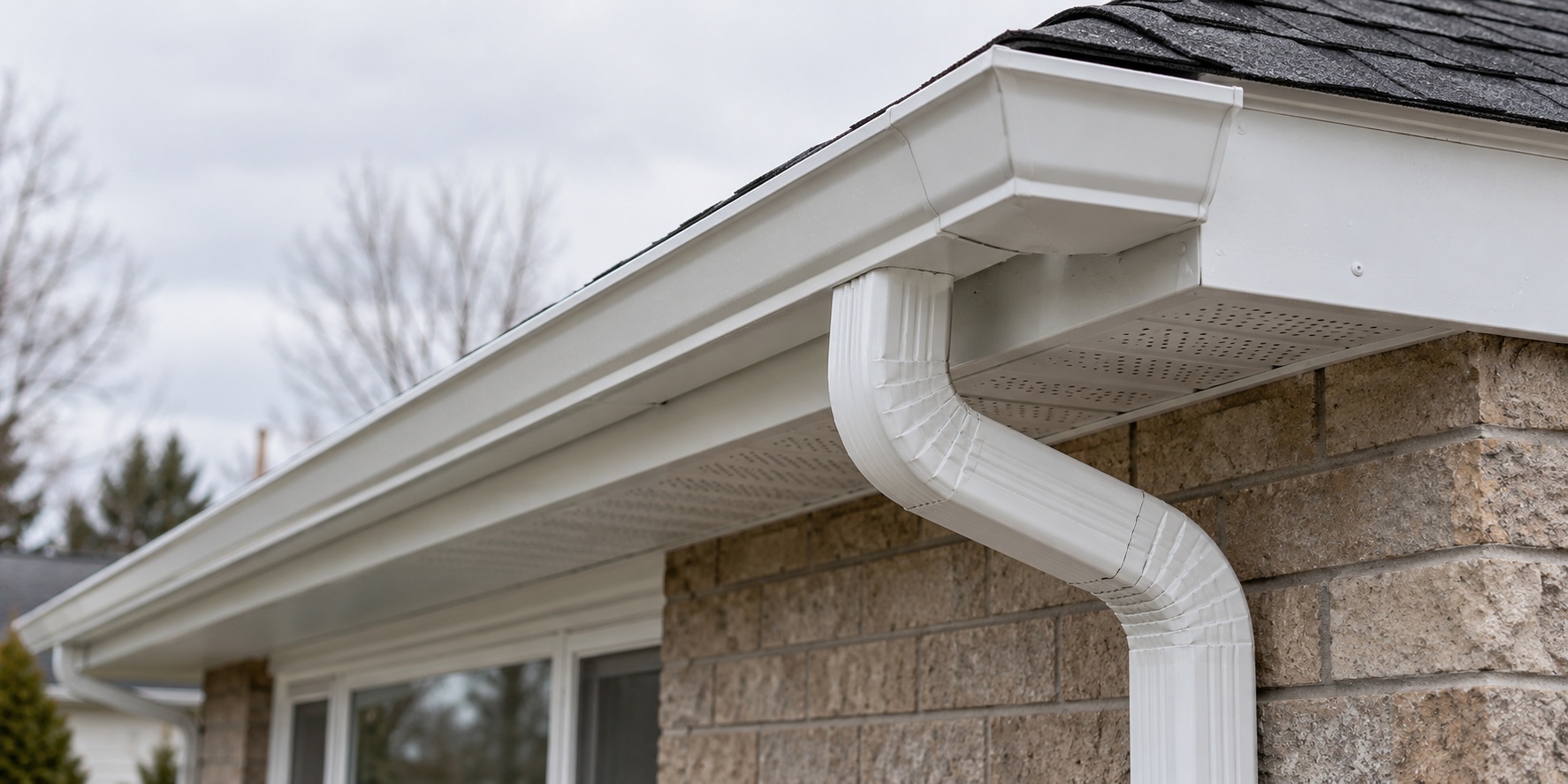
Most homeowners only think about gutters when something goes wrong. A leak, a sag, or water pooling near the foundation brings the system into focus. When it is time to install new gutters, the first question is almost always about cost. That is a fair question, but it is also the one with the most variation. Gutter installation pricing depends on your home, your roofline, the materials you choose, and where you live.
This guide breaks down what you can expect to pay for gutter installation in Canada, what drives the price up or down, and how to tell whether a quote is fair. It is written for homeowners who want to understand the numbers before they invite a contractor to the house.
For a property-specific written estimate, explore our gutter installation.
What new gutters typically cost in Canada
For a typical single-family home in Canada, professionally installed seamless aluminum gutters usually fall in a broad range. Most homeowners should expect to invest somewhere between $1,200 and $4,500 for a full replacement on an average-sized home. Smaller bungalows can land at the lower end, while larger two-storey homes with complex rooflines often reach the higher end.
These are installed prices, which include materials, labour, fasteners, downspouts, and disposal of the old system. They do not include fascia repairs, soffit work, or underground drainage, which are priced separately when they are needed.
Here is a rough breakdown by home size and complexity:
| Home type | Approximate installed range | What it usually includes |
|---|---|---|
| Small bungalow | $1,200 - $2,200 | One storey, simple roofline, 4 to 5 downspouts |
| Average two-storey home | $2,000 - $3,500 | Two storeys, moderate complexity, 5 to 7 downspouts |
| Large or complex home | $3,000 - $5,500+ | Multiple levels, dormers, steep pitches, 7+ downspouts |
| Gutter guards added | $800 - $2,000 extra | Depends on guard type and roofline length |
These figures are for seamless aluminum, which is the most common choice for Canadian homes. Other materials move the price in either direction.
Material choices and what they do to the price
Aluminum is the default for good reason. It resists rust, handles freeze-thaw cycles, and holds paint well. Seamless aluminum gutters are custom-cut on site to match your roofline, which means fewer seams and fewer leak points over time.
Vinyl costs less upfront but becomes brittle in cold weather. In Canadian winters, vinyl gutters can crack under ice and snow load, which is why most installers here recommend against them for full replacements.
Steel and copper cost significantly more. Steel is strong and durable but heavier, which can mean higher labour and stronger hanger requirements. Copper develops a patina over time and lasts for decades, but it is a premium material with a premium price tag, often two to three times the cost of aluminum.
Here is how material choice affects the installed price per linear foot:
| Material | Approximate cost per linear foot installed | Best suited for |
|---|---|---|
| Seamless aluminum | $10 - $18 | Most Canadian homes, all climate zones |
| Vinyl | $6 - $12 | Mild climates, budget projects, not recommended for harsh winters |
| Galvanized steel | $12 - $20 | Heavy snow load areas, commercial-style durability |
| Copper | $25 - $40+ | Heritage homes, architectural accents, long-term ownership |
Per-linear-foot pricing is useful for comparison, but it rarely tells the whole story. A 150-foot roofline with simple access prices differently than a 150-foot roofline with a steep pitch, multiple stories, and limited ladder access.
What else affects the final quote
Beyond material and roofline length, several factors move the price in measurable ways.
If the issue is limited to one area, a targeted gutter repair may be more practical.
Roofline complexity is one of the biggest. A simple rectangular home with four corners and two downspouts is straightforward. A home with dormers, bay windows, multiple roof levels, or valleys needs more miters, end caps, and custom cuts. Each additional seam and corner adds labour time and material.
Access and height matter too. A single-storey home with easy ground-level access is quicker and safer to work on than a three-storey home where equipment and staging are required. Taller homes often cost more because of the additional safety measures and time needed to move equipment around the property.
Fascia condition is a hidden variable that often surprises homeowners. Gutters are fastened to fascia boards, and if those boards are rotted, soft, or water-damaged, they cannot securely hold new gutters. Replacing fascia sections before installation adds to the cost, but skipping it means the new system will not have sound support. An honest quote will identify this need during the assessment rather than discovering it halfway through the job.
Downspout count and placement also affect the price. More downspouts mean more material, more outlets, and more labour. Homes with complex drainage needs, such as those on sloped lots or with foundation drainage concerns, may need extensions or splash blocks, which are priced separately.
Removal and disposal of the old system is included in most professional quotes, but it is worth confirming. Some estimates list removal as a separate line item, while others bundle it in. Either way, the old gutters and downspouts need to come off and be hauled away.
For a related guide, see Seamless vs Sectional Gutters: Which Is Right for Your Home.
Fascia and soffit repair costs
Fascia boards run along the roof edge and provide the surface that gutter hangers attach to. If water has been leaking behind the gutters for years, the fascia may be soft or rotted. Replacing fascia costs between $15 and $30 per linear foot installed, depending on the wood type, paint finish, and height.
Soffit sits under the roof overhang and provides attic ventilation. If soffit panels are damaged or missing, replacing them costs roughly $12 to $25 per linear foot. These repairs are often discovered during gutter installation, which is why a good contractor checks the roofline before quoting rather than after the old gutters come off.
Here is how fascia and soffit work can add to a gutter project:
| Repair type | Approximate cost | When it is needed |
|---|---|---|
| Fascia board replacement | $15 - $30 per linear foot | Rotted, soft, or water-damaged fascia |
| Soffit panel replacement | $12 - $25 per linear foot | Damaged, missing, or blocked soffit vents |
| Fascia priming and painting | $5 - $10 per linear foot | Exposed wood after board replacement |
| Gutter removal and reinstall | $3 - $6 per linear foot | When fascia work requires taking gutters off |
Seasonal timing and pricing
Gutter installation happens in every season in Canada, but spring and fall are the busiest. Contractors are often booked weeks in advance during these periods. If you can schedule installation during winter or early spring, you may find more availability and sometimes sharper pricing because demand is lower.
Weather affects scheduling more than price. Installers cannot seal gutters or work safely on a roofline during heavy rain, high winds, or extreme cold. A winter install is possible on mild days, but most homeowners prefer spring or autumn so the system is ready before heavy rain or snow.
Another useful read for this project is Gutter Colors and Styles: Matching Your Home's Exterior.
If you are combining gutter work with other exterior projects, such as roof replacement or painting, doing them together can save on staging and access costs. A contractor already on site with ladders and equipment can complete gutter work more efficiently than a separate visit months later.
How to tell whether a quote is fair
A fair quote is specific, not vague. It should list the measured roofline length, the gutter material and profile, the hanger type and spacing, outlet locations, downspout count and placement, removal and disposal, and any anticipated fascia work. If a quote simply says gutters installed with a total and no detail, it is hard to know what you are actually buying.
Ask whether the price includes hidden hanger fasteners or spike-and-ferrule installation. Hidden hangers are stronger and last longer, and they are standard on professional seamless installations. Ask about the warranty on labour and materials. Material warranties come from the manufacturer, but labour warranties come from the contractor, and both matter.
Be cautious of quotes that are dramatically lower than others. A very low price often means corners are being cut somewhere, whether that is thinner material, wider hanger spacing, or no removal of the old system. On the other hand, the highest quote is not automatically the best. The right choice is the one that clearly explains the scope, uses appropriate materials for your climate, and comes from a contractor who will stand behind the work.
Questions to ask before signing
These questions help you compare quotes and understand what each contractor is proposing:
- What material and gauge will be used, and why is it right for my home?
- Will the gutters be seamless and custom-cut on site?
- What hanger type and spacing will you use?
- How many downspouts do you recommend, and where will they discharge?
- Is removal and disposal of the old system included?
- Will you inspect the fascia and let me know if repairs are needed before installation?
- What is the warranty on materials and on labour?
- Can you provide references from recent local jobs?
- When can you start, and how long will the work take?
A contractor who answers these questions clearly and without hesitation is usually worth considering. One who avoids specifics or pressures you to sign quickly should be treated with caution.
For additional context, continue with Gutters for Older and Heritage Homes.
The real cost of waiting
Delaying gutter replacement when the system is failing costs more than the installation itself. Water that overflows or leaks near the foundation can contribute to basement moisture, soil erosion, and even foundation cracks over time. Water that backs up under the roofline can damage fascia, soffit, and interior ceilings. The cost of repairing water damage is almost always higher than the cost of installing gutters that work.
If your gutters are more than 20 years old, show widespread rust or corrosion, pull away from the house in multiple places, or overflow even after cleaning, replacement is worth serious consideration. A new system sized and pitched correctly for your home protects the roof, the foundation, and the landscaping for years to come.
Getting a useful estimate
The best way to understand what your specific home will cost is to have a contractor measure the roofline and assess the existing system in person. Photos from the ground help, but they cannot replace a physical inspection for pitch, fascia condition, and drainage needs.
When you request an estimate, share what you have noticed. Do you see leaks at certain seams? Does water pool near the foundation after rain? Have you cleaned the gutters recently, and did they overflow anyway? These details help the contractor focus the assessment and give you a quote that matches the actual work needed.
For homeowners in Hamilton and surrounding communities, request a free written estimate to discuss your gutter project. A clear scope and honest pricing make it easier to decide what is right for your home without guessing at the numbers.
Final takeaway
Gutter installation in Canada typically costs between $1,200 and $5,500 for most single-family homes, depending on size, material, and complexity. Seamless aluminum offers the best balance of durability, weather performance, and price for most homeowners. The cheapest quote is rarely the best value when it means thinner material, wider hanger spacing, or unclear scope. A fair quote is detailed, includes removal and disposal, identifies fascia needs up front, and comes with clear warranties on both materials and labour.
If your gutters are aging, leaking, or no longer moving water away from your home, replacing them now protects everything else. A well-installed system is one of the most affordable ways to prevent water damage before it starts.
For an estimate based on your roofline and access, request a free quote.