Seamless vs Sectional Gutters: Which Is Right for Your Home
A side-by-side comparison of seamless and sectional gutter systems, including cost, durability, and installation differences for Canadian homes.
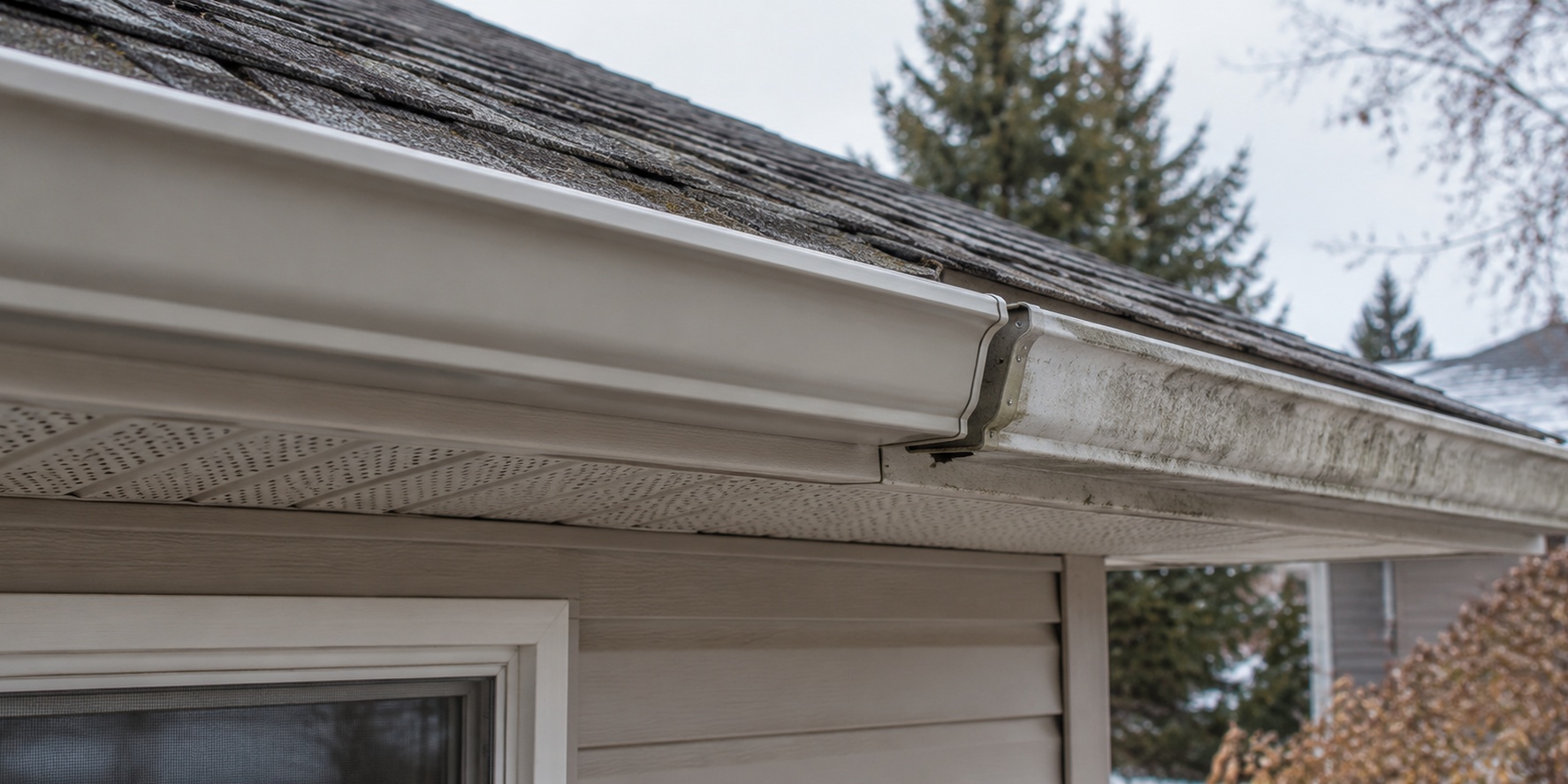
When homeowners decide to install new gutters, one of the first choices is between seamless and sectional systems. Both move water away from your foundation, but they differ in how they are made, installed, and maintained. Understanding the difference helps you choose the system that fits your home, your climate, and your budget.
This guide compares seamless and sectional gutters across cost, durability, leak potential, and installation. It is written for homeowners who want to make an informed decision before requesting an estimate.
For a roofline assessment and installation options, visit our gutter installation.
What seamless gutters are
Seamless gutters are custom-formed on site from a coil of aluminum, steel, or copper. A portable machine shapes the material into a continuous run that matches your roofline exactly. Because the gutter is made in one piece, there are no seams along the length of each run except at corners and downspout outlets.
Seamless gutters are the standard for professional gutter installation in Canada. Most installers carry the forming machine to your home, measure the roofline, and produce gutters to the exact length needed. This means fewer joints and fewer places for water to escape.
What sectional gutters are
Sectional gutters come in pre-cut lengths, usually ten feet, that are joined together during installation. Each joint is sealed with caulk or gasket material. Sectional systems are sold at home improvement stores and are common in DIY installations.
Sectional gutters can be made of vinyl, aluminum, or steel. Vinyl sectional gutters snap together with plastic connectors. Aluminum and steel sectional gutters are joined with overlap seams and sealed at the joints.
Cost comparison
Seamless gutters cost more upfront because they require professional installation with a forming machine. Sectional gutters cost less initially, especially if you install them yourself, but the long-term picture is different.
Here is a general cost comparison per linear foot installed:
| System | Approximate cost per linear foot | Typical lifespan |
|---|---|---|
| Seamless aluminum | $10 - $18 | 20 to 30 years |
| Sectional aluminum | $6 - $12 | 10 to 20 years |
| Sectional vinyl | $4 - $9 | 10 to 15 years |
| Seamless steel | $12 - $20 | 20 to 30 years |
| Seamless copper | $25 - $40+ | 50+ years |
Seamless systems cost more per linear foot, but they usually last longer and need fewer repairs. Sectional systems cost less to buy, but the joints are weak points that can fail and need resealing or replacement over time.
Leak potential and durability
The main advantage of seamless gutters is that they have far fewer seams. Every seam is a potential leak point. Sectional gutters have a seam every ten feet, plus additional seams at corners and outlets. Over time, the sealant at these joints can crack, separate, or fail, especially in Canadian freeze-thaw cycles.
Seamless gutters only have seams at corners and downspout connections, which are fewer and more accessible for inspection. With fewer joints to fail, seamless systems tend to stay watertight longer.
Durability also depends on material. Aluminum resists rust and handles freeze-thaw cycles well. Vinyl becomes brittle in cold weather and can crack. Steel is strong but heavier and needs proper coating to resist corrosion. Copper lasts the longest but costs the most.
Installation differences
Seamless gutters require professional installation. The forming machine must be brought to your home, and the gutters are cut to length on site. This means you cannot buy seamless gutters off the shelf and install them yourself. The benefit is a precise fit with no gaps or wasted material.
Sectional gutters can be installed by a homeowner with basic tools. They come in standard lengths that you cut to size and connect with connectors and sealant. DIY installation saves on labour, but it takes time, and mistakes in pitch or joint sealing can cause leaks.
If the issue is limited to one area, a targeted gutter repair may be more practical.
Professional installation is recommended for both systems, especially on two-storey homes or complex rooflines. Improper pitch causes water to pool in the gutters, which leads to sagging, overflow, and premature failure.
Maintenance requirements
Seamless gutters need less maintenance because there are fewer joints to inspect and reseal. You still need to clean them regularly to remove leaves and debris, but you do not need to re-caulk seams every few years.
Sectional gutters need more maintenance. The joints should be inspected annually, and the sealant may need to be reapplied as it ages. Vinyl sectional gutters can become brittle in cold weather and may crack at the connectors.
Both systems need downspout flushing and debris removal to prevent clogs and overflow.
Climate considerations for Canada
Canadian weather is hard on gutters. Freeze-thaw cycles, heavy snow, and ice dams put stress on every joint and seam. Seamless aluminum performs well in these conditions because it expands and contracts evenly without weak points at every seam.
Sectional vinyl is the least suitable for harsh Canadian winters. It becomes brittle in cold temperatures and can crack under ice and snow load. Sectional aluminum is a step up, but the sealed joints still face more stress than seamless runs.
For a related guide, see Gutter Colors and Styles: Matching Your Home's Exterior.
If you live in an area with heavy snow or frequent freeze-thaw cycles, seamless gutters are generally the better long-term investment.
Repair and replacement
When a section of seamless gutter is damaged, a contractor can cut out the damaged portion and form a new piece to fit. Because the system was custom-made, matching the profile and colour is straightforward.
When a section of sectional gutter is damaged, you can replace the individual ten-foot length. However, finding an exact colour match for older vinyl or painted aluminum can be difficult, and the new section introduces more seams that need sealing.
Over the life of a home, seamless systems usually require fewer repair calls. Sectional systems may need joint resealing or section replacement more often.
The honest bottom line
Seamless gutters cost more upfront but offer fewer leak points, longer lifespan, and better performance in Canadian weather. They are the better choice for most homeowners, especially those with two-storey homes, complex rooflines, or harsh winter conditions.
Sectional gutters cost less initially and can be installed by a homeowner, but they have more seams that can fail and may need more maintenance over time. They can be a reasonable choice for small projects, budget constraints, or single-storey sheds and garages.
Another useful read for this project is Gutter Installation Cost Guide for Canadian Homes.
Warranty and lifespan considerations
Warranties differ between seamless and sectional systems. Material warranties come from the manufacturer and cover defects in the metal or coating. Labour warranties come from the contractor and cover installation workmanship. Seamless systems installed by professionals usually come with a labour warranty because the contractor controls the entire process from forming to hanging. Sectional systems installed by homeowners rarely include a labour warranty, and manufacturer warranties on vinyl or painted aluminum may be limited.
Ask about both warranties before signing. A long material warranty on a poorly installed system does not help if the gutters sag or leak within a year. A short labour warranty on a seamless system may still be worthwhile if the installer has a strong local reputation.
Colour and appearance
Seamless gutters are formed from a coil, so the colour runs through the material and is consistent along the entire run. Sectional gutters are often painted or come in pre-finished colours, and matching a replacement section ten years later can be difficult. If appearance matters to you, seamless gutters present a cleaner look with no visible joints along the runs.
Gutter profiles
Both seamless and sectional systems come in common profiles such as K-style and half-round. K-style gutters have a flat back and bottom with a decorative front edge, and they hold more water than half-round of the same width. Half-round gutters have a traditional rounded shape and are common on older or heritage homes. Seamless forming machines can produce both profiles on site, while sectional systems are limited to what is stocked at the store.
Environmental and disposal considerations
Aluminum gutters, whether seamless or sectional, are recyclable. When a contractor removes old gutters, the aluminum can often be recycled rather than sent to landfill. Vinyl gutters are less recyclable and may end up as waste. If sustainability matters to you, ask your contractor about recycling old gutters and downspouts.
Steel and copper are also recyclable and have high scrap value, which can offset some disposal cost. Copper gutters, in particular, retain value even at the end of their long life.
When sectional gutters are a reasonable choice
Sectional gutters are not always the wrong choice. They can make sense for:
For additional context, continue with New Construction vs Retrofit Gutter Installation.
- Small projects such as a shed, garage, or garden shed where appearance and lifespan are less critical
- Budget-constrained homeowners who need gutters now and cannot afford seamless installation
- DIY homeowners with the tools, time, and comfort working at height on a single-storey structure
- Temporary solutions while saving for a full seamless replacement
Even in these cases, proper pitch, secure hangers, and sealed joints matter more than the system type. A poorly installed seamless system will fail faster than a well-installed sectional system.
When seamless gutters are the better choice
Seamless gutters are the better choice for:
- Two-storey or taller homes where access is difficult and repairs are costly
- Complex rooflines with dormers, valleys, and multiple levels
- Homes in harsh winter climates with freeze-thaw cycles
- Homeowners who plan to stay in their home long term and want minimal maintenance
- Homes where appearance matters, such as front-facing elevations
The higher upfront cost is offset by fewer leak points, less maintenance, and a longer service life.
Getting an accurate comparison estimate
When requesting estimates, ask each contractor to quote the same system type so you can compare apples to apples. One contractor may quote seamless aluminum while another quotes sectional vinyl, and the prices will not be directly comparable. Ask for the measured roofline length, the number of downspouts, the material and gauge, the hanger type, and whether removal and disposal are included.
A contractor who will not provide a written, itemized quote should be treated with caution, regardless of which system they recommend.
Quick reference FAQ
- Are seamless gutters worth the extra cost? For most Canadian homes, yes. Fewer leak points and longer lifespan make them better value over time.
- Can I install sectional gutters myself? Yes, on a single-storey home with easy access. Two-storey homes should use a professional.
- How long do seamless aluminum gutters last? Typically 20 to 30 years with proper maintenance.
- Do seamless gutters come in different colours? Yes, they are formed from coated aluminum coil in several standard colours.
- Do I need gutters on every side of the house? Not always, but all roof edges that shed water toward the foundation should have drainage.
- What is the most common gutter material in Canada? Seamless aluminum is the standard choice for most homes.
Final takeaway
Seamless gutters cost more upfront but offer fewer leak points, longer lifespan, and better performance in Canadian weather. They are the better choice for most homeowners, especially those with two-storey homes, complex rooflines, or harsh winter conditions.
Sectional gutters cost less initially and can be installed by a homeowner, but they have more seams that can fail and may need more maintenance over time. They can be a reasonable choice for small projects, budget constraints, or single-storey sheds and garages.
For most Canadian homes, seamless aluminum offers the best balance of durability, weather performance, and price. If you are unsure which system suits your home, request a free written estimate to discuss your options. A contractor can measure your roofline and explain whether seamless or sectional makes more sense for your situation.
For an estimate based on your roofline and access, request a free quote.