New Construction vs Retrofit Gutter Installation
A comparison of gutter installation on new construction homes versus retrofitting gutters on existing homes, including process, cost, and considerations for each.
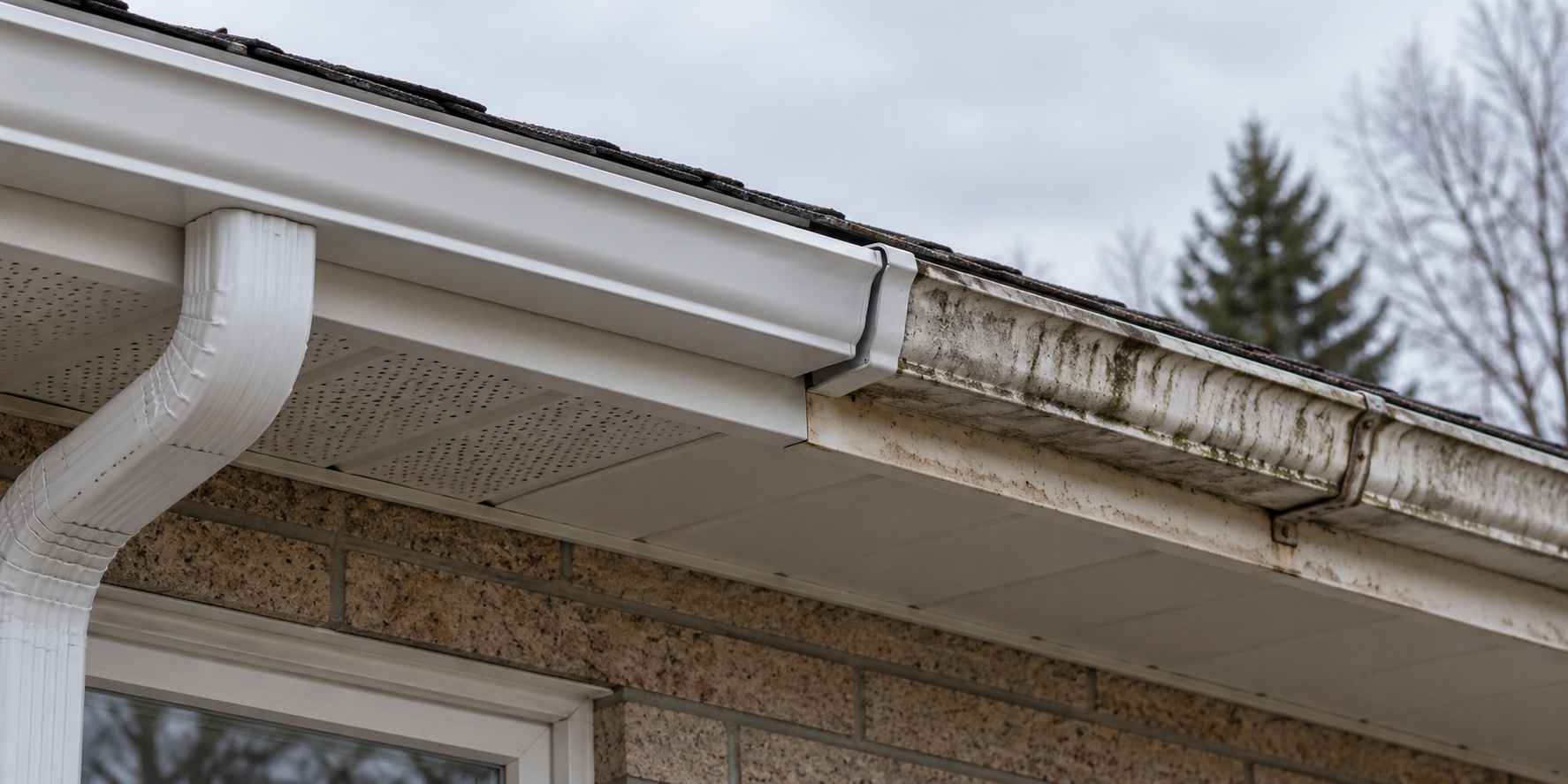
Gutter installation happens in two main contexts: on new construction homes and on existing homes through retrofit. The process, cost, and considerations differ between the two. New construction allows gutters to be planned with the roof and fascia from the start. Retrofit requires working with what is already there, which can mean older fascia, unknown conditions, and finished landscaping.
This guide compares new construction and retrofit gutter installation. It covers the process, costs, challenges, and what to expect for each. It is written for homeowners, builders, and property owners who are planning gutter work.
Our gutter installation can assess an existing roofline or coordinate a new build.
New construction gutter installation
New construction means gutters are installed as part of building a new home. The roof, fascia, and soffit are new. The site is accessible. There is no existing system to remove.
Advantages of new construction
- The fascia is new and sound, so gutter hangers have solid support
- The roofline is designed with drainage in mind
- No old gutters to remove and dispose of
- Landscaping is not yet finished, so access is easier
- Gutters can be coordinated with roofing and siding work
Process
On new construction, gutters are typically installed after the roof is complete but before or during siding and exterior finishing. The steps are:
- The fascia is installed and painted or finished
- The roofline is measured for gutter runs and downspout locations
- Seamless gutters are formed on site or sectional gutters are measured
- Gutters are hung with hidden hangers or spikes
- Downspouts are installed and directed away from the foundation
- The system is tested with water to confirm flow
Cost considerations
New construction gutter installation is often less expensive per linear foot than retrofit because there is no removal, no disposal, and no finished landscaping to protect. The fascia is already accessible, and the crew can work efficiently.
However, new construction is part of a larger project. The gutter cost is one line item among many. Coordinating with the roofer, siding contractor, and painter matters.
Retrofit gutter installation
Retrofit means adding or replacing gutters on an existing home. The fascia may be old. The landscaping is finished. There may be an old system to remove.
Advantages of retrofit
- Improves drainage on a home that never had gutters
- Replaces a failing system before water damage occurs
- Can be done without replacing the roof
- Upgrades material and performance on an older home
Challenges of retrofit
- Old fascia may be rotted or soft and need replacement
- Landscaping, decks, and walkways must be protected
- An old system must be removed and disposed of
- Access may be limited by mature trees or structures
- Unknown conditions are discovered once work begins
Process
Retrofit installation follows these steps:
- Inspect the existing system, fascia, and roofline
- Remove old gutters and downspouts if present
- Inspect and repair fascia as needed
- Measure the roofline for new gutters
- Form or order new gutters
- Install gutters with new hangers
- Install downspouts and extensions
- Test the system and clean up
Cost considerations
Retrofit is usually more expensive per linear foot than new construction. The removal, disposal, fascia repair, and finished landscaping protection all add cost. If fascia repair is needed, the price goes up further. A contractor may not know the full cost until they remove the old gutters and see the fascia.
Comparing new construction and retrofit
Here is how the two contexts compare:
| Factor | New construction | Retrofit |
|---|---|---|
| Fascia condition | New and sound | May be old or rotted |
| Removal required | No | Yes, if replacing old gutters |
| Landscaping impact | Minimal | Must protect finished landscaping |
| Access | Easy | May be limited |
| Coordination | With other trades | Standalone or with exterior work |
| Cost per linear foot | Lower | Higher |
| Unknown conditions | Few | More |
| Planning | Part of build | Standalone project |
Fascia condition in retrofit
The biggest unknown in retrofit is the fascia. Gutters are fastened to fascia boards. If the fascia is old, soft, or rotted, new gutters cannot be securely fastened. During retrofit, the contractor should inspect the fascia before installing new gutters.
If fascia repair is needed, it adds cost and time. The contractor may need to replace sections of wood, prime, and paint. On older homes, matching the original wood and finish may be important.
If the issue is limited to one area, a targeted gutter repair may be more practical.
Landscaping and access in retrofit
Retrofit work happens around finished landscaping. Decks, gardens, trees, and walkways may be in the way. The contractor must protect these areas and clean up debris. This takes more time than new construction, where the site is open.
If mature trees are close to the roofline, ladder placement and gutter access may be limited. This can increase labour time and cost.
New construction considerations
Even in new construction, some decisions matter:
Gutter material
Choose the material early. Aluminum is common, but copper or steel may be preferred for certain architectural styles. The material affects cost, lifespan, and appearance.
Downspout placement
Plan downspout locations during design. Water should discharge away from the foundation, walkways, and driveways. On a new home, you have more freedom to place downspouts where they work best.
For a related guide, see Gutter Installation Cost Guide for Canadian Homes.
Integration with roofing
Gutters and roofing work together. The roofer and gutter installer should coordinate so that drip edge, flashing, and gutters are compatible.
Timing
Install gutters after the roof is complete but before exterior finishing is complete. This avoids damaging finished work and allows proper sequencing.
Retrofit considerations
For retrofit, some additional factors matter:
Timing
Retrofit can be done any time the weather allows. Spring and autumn are busiest. Winter installations are possible but less common. If your gutters are failing, do not wait for a specific season.
Coordination with other work
If you are replacing the roof, painting the exterior, or replacing windows, consider doing gutters at the same time. Scaffolding, ladders, and access are already set up, which can save cost.
Budget for unknowns
Set aside extra budget for fascia repair, unexpected conditions, and additional downspouts. A retrofit quote may change once the old gutters are removed and the fascia is exposed.
Another useful read for this project is Seamless vs Sectional Gutters: Which Is Right for Your Home.
Getting an accurate estimate
For new construction, the builder or gutter contractor can provide a reliable estimate based on plans and measurements.
For retrofit, the estimate may be preliminary until the old gutters are removed. Ask the contractor whether the quote includes fascia repair and what happens if more work is needed. A good contractor will explain the process and the potential for changes.
Real-world examples
Example 1: New construction on a bungalow
A homeowner building a new single-storey bungalow wanted seamless aluminum gutters. The fascia was new and sound. The contractor formed the gutters on site, installed them with hidden hangers, and placed three downspouts to discharge water away from the foundation. The entire job took one day. Cost: about $1,800 for 120 linear feet.
Example 2: Retrofit on a 1960s two-storey home
A homeowner buying a 1960s home found the original steel gutters were rusted and pulling away. The contractor removed the old gutters, found rotted fascia along the front elevation, replaced the fascia, and installed new seamless aluminum gutters with four downspouts. The job took two days. Cost: about $3,200 for 150 linear feet including fascia repair.
Example 3: Retrofit on a heritage home
A homeowner in a heritage district wanted new gutters. The municipal heritage committee required copper half-round gutters. The contractor installed copper gutters with traditional hangers. The approval process added two weeks. Cost: about $6,000 for 140 linear feet.
Coordinating gutter installation with other exterior work
If you are planning other exterior projects, consider doing gutters at the same time:
For additional context, continue with Gutter Colors and Styles: Matching Your Home's Exterior.
- Roof replacement: Gutters and roofing work together. Coordinate drip edge, flashing, and gutter installation.
- Exterior painting: Paint the fascia before installing gutters, or paint gutters to match the new exterior colour.
- Siding replacement: Coordinate gutter removal and reinstallation with siding work to avoid damage.
- Window replacement: Consider gutter access and downspout placement when replacing windows.
Doing multiple projects at once can save on scaffolding, ladders, and labour.
New construction timing
On new construction, gutters are typically installed after the roof is complete but before or during siding and exterior finishing. Installing too early can damage gutters during other construction work. Installing too late can delay the project.
Retrofit timing
Retrofit gutter installation can be done any time the weather allows. Spring and autumn are busiest. Winter installations are possible but less common. If your gutters are failing, do not wait for a specific season. Water damage costs more than a timely repair.
Getting multiple estimates
For both new construction and retrofit, get at least three estimates. Compare:
- Measured roofline length
- Material and gauge
- Hanger type and spacing
- Downspout count and placement
- Removal and disposal (retrofit only)
- Warranty terms
- Timeline
The lowest estimate is not always the best value. A detailed, written estimate shows the contractor understands the scope.
Quick reference FAQ
- Can I install gutters on a new home myself? It is possible but not recommended. Professional installation ensures proper pitch and secure hangers.
- Should I replace gutters when replacing my roof? It is often efficient to do both at the same time, since ladders and access are already set up.
- Can I add gutters to a home that never had them? Yes. Retrofit installation is common on older homes that lack gutters.
- How long does new construction gutter installation take? Most single-family homes are completed in one to two days.
- Do I need downspouts on every corner? Not every corner, but every major roofline section needs drainage. A contractor can recommend placement.
- Can I use sectional gutters on new construction? Yes, but seamless gutters are more common on new homes because they have fewer leak points.
- Should I replace gutters when replacing the roof? Yes, coordinating both projects saves on labour and access.
- Can gutters be installed in winter? Yes, on mild days, but spring and autumn are the most common seasons for installation.
- What happens if I skip gutters on a new home? Water will run off the roof directly to the ground, which can cause foundation problems, soil erosion, and basement leaks over time.
- Do I need gutters on every side of the house? Not every corner, but every major roofline section needs drainage. A contractor can recommend placement.
Cost comparison summary
| Factor | New construction | Retrofit |
|---|---|---|
| Removal required | No | Yes |
| Fascia condition | New and sound | May need repair |
| Landscaping impact | Minimal | Must protect |
| Access | Easy | May be limited |
| Cost per linear foot | Lower | Higher |
Whether you choose new construction or retrofit installation, proper pitch, secure hangers, and correct downspout placement are essential. Both approaches require careful planning and quality materials to ensure your gutters perform well for years.
Final takeaway
New construction gutter installation is straightforward because the fascia is new, access is easy, and there is no old system to remove. Retrofit installation is more complex because of unknown conditions, removal, disposal, and finished landscaping. Both contexts require proper pitch, secure hangers, and correct downspout placement. If you are building a new home, plan gutters early in the process. If you are retrofitting an existing home, budget for fascia repairs and choose a contractor experienced with existing homes.
For an estimate based on your roofline and access, request a free quote.