Ice Dams and Gutters in Canadian Winters
How ice dams form, how they damage gutters and roofs, and what Canadian homeowners can do to prevent winter water damage.
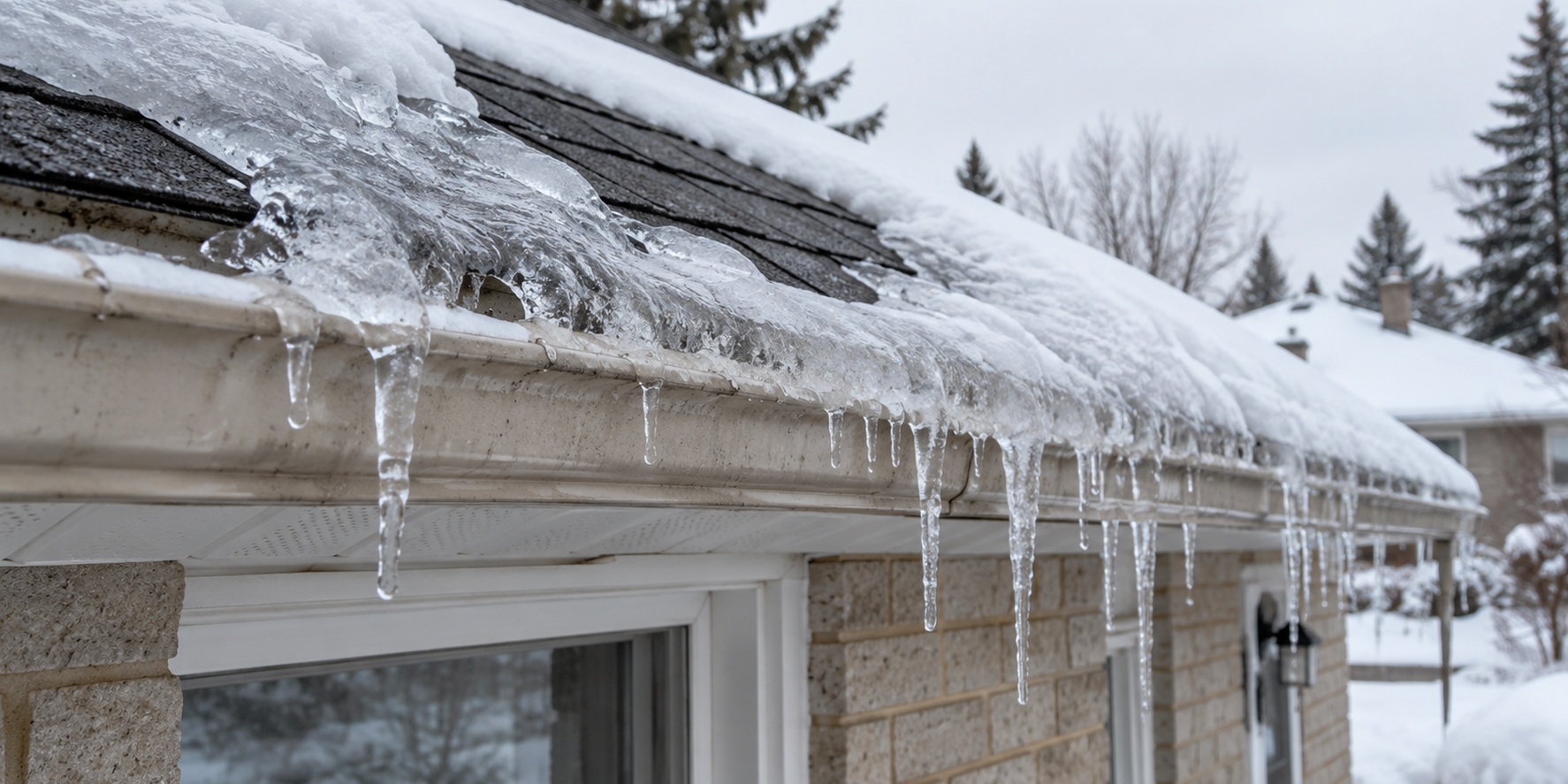
Ice dams are one of the most damaging winter problems for Canadian homeowners. They form when heat escaping from the attic melts snow on the roof, and the water refreezes at the colder roof edge. The resulting ice buildup blocks drainage, forces water under shingles, and can damage gutters, fascia, and interior ceilings.
This guide explains how ice dams form, how they affect gutters, and what you can do to prevent them. It is written for homeowners who want to protect their homes through the winter without expensive emergency repairs.
If ice has loosened or damaged a section, explore our gutter repair.
What an ice dam is
An ice dam is a ridge of ice that forms at the edge of a roof, usually above the gutter. It happens when attic heat melts snow on the upper roof. The meltwater flows down toward the edge, where the roof surface is colder because it extends beyond the heated attic space. There, the water refreezes. As more snow melts and more water refreezes, a thick ridge of ice builds up.
The ice dam acts like a dam in a river. It traps meltwater behind it. Because the water has nowhere to drain, it backs up under the shingles and can leak into the attic, walls, and ceilings.
Gutters are often at the centre of this problem. Ice can fill the gutter completely, and the weight of the ice can pull gutters away from the fascia. Ice can also form behind the gutter, between the gutter and the fascia board, causing hidden damage that is not visible until spring.
How ice dams damage gutters
Ice dams cause several types of damage to gutter systems:
Gutter pulling and sagging
Ice is heavy. A gutter full of ice can weigh hundreds of pounds. That weight can pull gutters away from the fascia, bend hangers, and bend the gutter itself. Once a gutter pulls away, it no longer sits at the correct pitch, and water will not drain properly even after the ice melts.
Fascia and soffit damage
When ice forms between the gutter and the fascia, it can push against the wood and cause rot or separation. The fascia board holds the gutter hangers, so damaged fascia means the gutter cannot be securely reattached.
Downspout blockage
Ice can freeze inside downspouts, blocking drainage entirely. When meltwater cannot exit through the downspout, it backs up into the gutter and overflows. Frozen downspouts can also burst if the ice expands enough.
Interior water damage
The most serious damage happens when trapped meltwater backs up under shingles. It can soak insulation, stain ceilings, warp drywall, and lead to mould growth. This damage often becomes visible only after the ice dam has been present for days or weeks.
Why Canadian homes are vulnerable
Canadian winters create ideal conditions for ice dams. Heavy snowfall provides plenty of material to melt. Freeze-thaw cycles cause repeated melting and refreezing. Cold roof edges keep the ice in place. Homes with poor attic insulation or ventilation lose more heat through the roof, which increases melting.
Homes in Ontario, Quebec, the Prairies, and Atlantic Canada all experience ice dams, though the severity varies by region and by winter. A home with a complex roofline, multiple valleys, or a low-pitch roof is more vulnerable because water moves more slowly and has more places to pool.
Prevention starts with the attic
The root cause of ice dams is heat escaping from the attic. The most effective prevention is to keep the attic cold so the roof stays cold and snow does not melt unevenly.
Insulation
Add or upgrade attic insulation to reduce heat loss from the living space below. Building codes in Canada specify minimum R-values for attic insulation, and many older homes fall short. Focus on the attic floor, around hatches, and around recessed lights or chimneys where heat can escape.
When damage is widespread, compare repair with gutter installation options.
Ventilation
Good attic ventilation lets cold outdoor air circulate through the attic, keeping the roof temperature close to outdoor temperature. Soffit vents, ridge vents, and gable vents work together to create airflow. Blocked vents or insufficient ventilation trap heat and increase melting.
Air sealing
Seal air leaks between the house and the attic. Common leak points include attic hatches, plumbing stacks, electrical wires, and recessed lights. Warm air leaking into the attic carries heat that melts snow. Sealing these leaks improves energy efficiency and reduces ice dam risk.
Gutter-specific prevention steps
While attic improvements address the root cause, gutter-specific steps help manage the symptoms.
Clean gutters before winter
Clear leaves and debris from gutters and downspouts in late autumn. A clogged gutter cannot drain meltwater, so ice builds up faster. Clean gutters also reduce the weight load when ice does form.
Check pitch and hangers
Make sure gutters are pitched correctly toward downspouts and that hangers are secure. A gutter that holds water will freeze more readily. Loose hangers cannot support the weight of ice.
For a related guide, see Why Gutter Pitch and Slope Matter for Canadian Homes.
Consider heat cables
Heat cables, also called heat tape, can be installed in gutters and downspouts to keep channels open during winter. They are not a substitute for attic improvements, but they can help in problem areas such as valleys or north-facing roof edges. Use them only as directed and with proper outdoor-rated electrical connections.
Remove snow safely
After heavy snowfall, consider having snow removed from the lower portion of the roof using a roof rake from the ground. Do not climb on the roof in winter. Removing snow reduces the amount of meltwater available to form ice dams. Never chip away at ice with a hammer or sharp tool, as this can damage shingles and gutters.
What to do if you already have an ice dam
If you notice ice building up at the roof edge or water leaking inside, act quickly.
Do not climb on the roof
Winter roofs are slippery and dangerous. Do not attempt to chip ice away or climb onto an icy roof. The risk of serious injury is high.
Contact a professional
A roofing or gutter contractor can assess the situation and may use steam equipment to remove ice safely. Steam removes ice without damaging shingles or gutters, unlike chipping or salting.
Address interior water
If water is leaking inside, move valuables and place containers under the leak. Contact a contractor to address both the ice dam and any interior damage.
Another useful read for this project is Gutter Noise: Dripping, Gurgling, and Overflowing Sounds Explained.
Long-term solutions
The only permanent fix for ice dams is to stop heat from reaching the roof. That means better insulation, better ventilation, and air sealing. Gutter guards, heat cables, and snow removal help manage the problem but do not solve it.
If your home has recurring ice dams every winter, schedule an attic inspection. A contractor can measure insulation levels, check ventilation, and use thermal imaging to find heat loss. The investment in attic improvements often pays for itself through lower heating bills and avoided water damage.
Regional ice dam risk across Canada
Ice dam risk varies by region, snowfall, and winter severity. Homes in Ontario, Quebec, and Atlantic Canada often see heavy snow and frequent freeze-thaw cycles, creating ideal conditions for ice dams. Prairie homes in Alberta, Saskatchewan, and Manitoba experience extreme cold with dry snow, which can still cause ice dams when attic heat melts the snow layer closest to the roof. Coastal British Columbia sees less snow but more rain-on-snow events, which can overload gutters and cause similar drainage problems.
Homes in mountain areas or on north-facing slopes may hold snow longer and experience more ice damming than homes in exposed, windy locations where snow blows off the roof. Local building codes in some Canadian regions already require ice and water shield under shingles at the roof edge, but older homes may lack this protection.
Cost of ice dam damage
Ice dam damage can be expensive. Interior water damage from a single event can cost thousands of dollars to repair, including ceiling replacement, drywall repair, insulation removal, and mould remediation. Exterior damage such as gutter replacement, fascia repair, and shingle replacement adds to the cost. Because ice dams often recur every winter unless the root cause is addressed, homeowners who only treat the symptoms may face the same repair bills year after year.
Preventing ice dams through attic improvements typically costs less than a single major water damage claim. Improved insulation and ventilation also lower heating bills, providing ongoing savings beyond ice dam prevention.
Insurance considerations
Home insurance may cover sudden water damage from an ice dam, but coverage varies by policy and by insurer. Some policies exclude damage caused by ice dams or by lack of maintenance. If an insurer determines that the ice dam resulted from poor attic maintenance or known, unaddressed problems, they may deny or reduce the claim.
For additional context, continue with Annual Gutter Inspection Checklist.
Before winter, review your policy to understand what is covered. Document the condition of your roof, gutters, and attic with photos. If you experience ice dam damage, take photos of the ice, the water entry point, and any interior damage before beginning cleanup. Contact your insurer promptly to understand the claims process.
Heat cables in detail
Heat cables, also called heat tape or de-icing cables, are electrical cables laid in gutters and downspouts to melt channels through ice. They can help keep drainage paths open during winter, but they have limitations.
Heat cables consume electricity and add to winter energy costs. They must be installed correctly with outdoor-rated connections and GFCI protection. They do not stop ice from forming on the roof surface above the gutter, so water can still back up under shingles if the attic is too warm. They are best used as a supplement to attic improvements, not as a standalone solution.
If you install heat cables, turn them on before snow accumulates and before temperatures drop far below freezing. Once ice has already formed, heat cables may not be able to melt through it quickly enough to prevent damage.
Roof design and ice dams
Some roof designs are more prone to ice dams than others. Low-slope roofs allow water to pool and freeze more easily than steep roofs. Roofs with valleys, dormers, skylights, and multiple levels create areas where snow accumulates and meltwater pools. North-facing roof edges receive less sun and stay colder, encouraging ice formation. Complex rooflines with many transitions between warm and cold areas are the most vulnerable.
If you are building a new home or replacing a roof, consider a steeper pitch, simplified roofline, and ice and water shield membrane along the eaves. These design choices reduce ice dam risk from the start.
Gutter guards and ice dams
Gutter guards do not prevent ice dams. Snow and ice can accumulate on top of guards, and freeze-thaw cycles can still cause ice to build up at the roof edge. Some guard designs may even trap ice against the fascia. If you have gutter guards and experience ice dams, focus on attic improvements rather than expecting the guards to solve the problem.
Quick reference FAQ
- Can gutter guards stop ice dams? No. Guards do not prevent ice dams; attic insulation, ventilation, and air sealing do.
- Can I chip ice off my roof? No. Chipping damages shingles and gutters and is dangerous on icy roofs.
- How do I know if I have an ice dam? Look for ice ridges at the roof edge, icicles behind gutters, or water stains on ceilings.
- Will better attic insulation lower my heating bill? Yes, reducing heat loss through the roof saves energy and reduces ice dam risk.
- Should I remove snow from my roof? Use a roof rake from the ground after heavy snowfall. Never climb on an icy roof.
Final takeaway
Ice dams form when attic heat melts snow and the water refreezes at the roof edge. They damage gutters, fascia, and interiors, and they are common in Canadian winters. Prevention starts with a cold attic through insulation, ventilation, and air sealing. Clean gutters before winter, check pitch and hangers, and never climb on an icy roof. If ice dams are a recurring problem, address the attic rather than treating the symptoms year after year.
For an estimate based on your roofline and access, request a free quote.